Tiếng Việt
No-prep porcelain veneers are a modern dental aesthetic trend, favored for their ability to enhance the smile while preserving natural teeth. However, many opinions suggest that not everyone is suitable for this method. So what exactly are no-prep veneers, and when can they be safely applied?
The truth about no-prep porcelain veneers
In recent years, the term “no-prep porcelain veneers” has been frequently mentioned as a breakthrough in cosmetic dentistry.
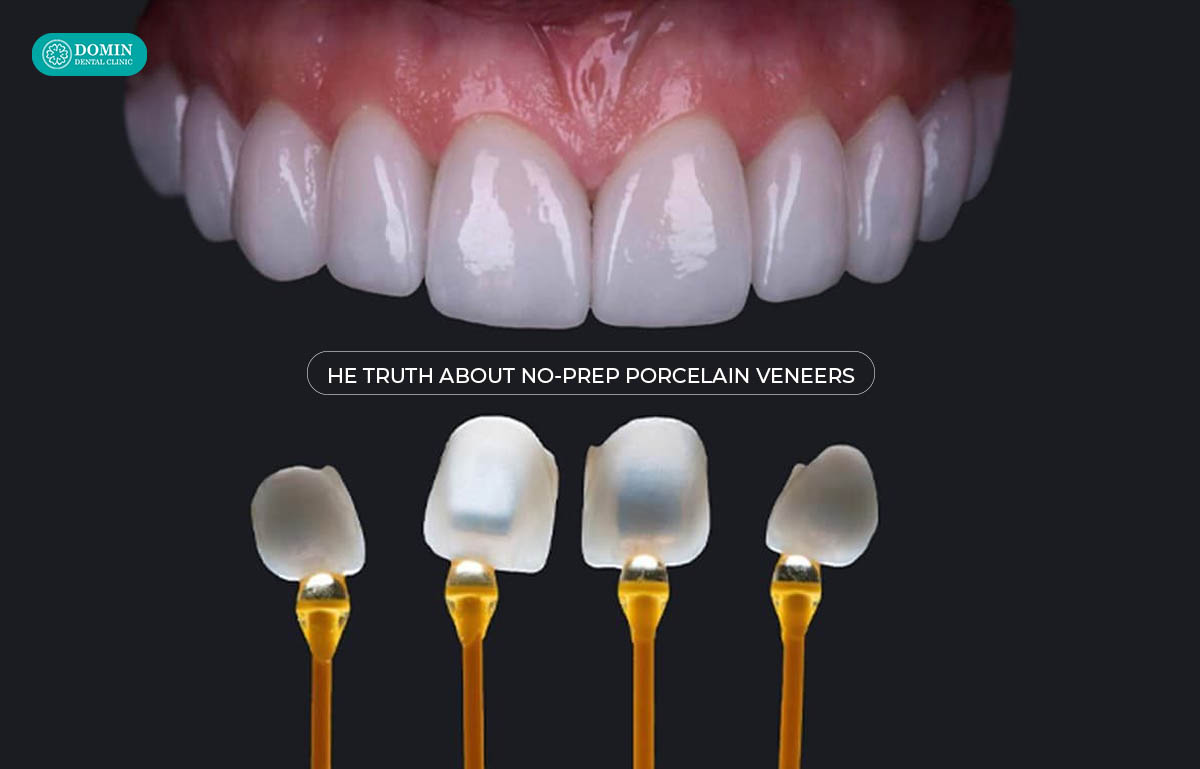
Numerous advertisements claim that “veneers can be applied without enamel reduction, without pain, and with 100% preservation of natural teeth,” leading many people to believe this is the perfect solution for achieving a bright smile without worrying about tooth preparation. However, the concept of “no-prep” needs to be understood more accurately and scientifically.
In clinical practice, completely no-prep porcelain veneers can only be applied in a small number of special cases, where the natural tooth shape and position are already suitable for veneer placement without causing bite issues or affecting overall aesthetics.
In most cases, veneer placement still requires minimal enamel reduction (about 0.1–0.2 mm) to ensure:
• Optimal bonding between the veneer and natural tooth.
• Uniform veneer thickness to avoid a bulky feeling.
• Well-adapted margins to prevent gaps that may lead to gum inflammation or future debonding.
Therefore, when referring to “no-prep veneers,” it should not be seen as a universal solution, but rather a selective indication that requires a highly skilled dentist for proper evaluation, design, and execution.
In other words, “no-prep” is not the goal, but the result of accurate diagnosis and precise technical control. For this reason, patients should not rely solely on advertising claims, but instead seek professional consultation to determine whether their dental condition is suitable for this approach.
When can no-prep porcelain veneers be applied?
No-prep veneer placement is considered a special indication and is not common in clinical practice. For veneers to be bonded directly onto teeth while still ensuring proper adhesion, fit, and overall aesthetics, the natural teeth must meet very ideal conditions in terms of shape and position.
Cases suitable for no-prep veneers
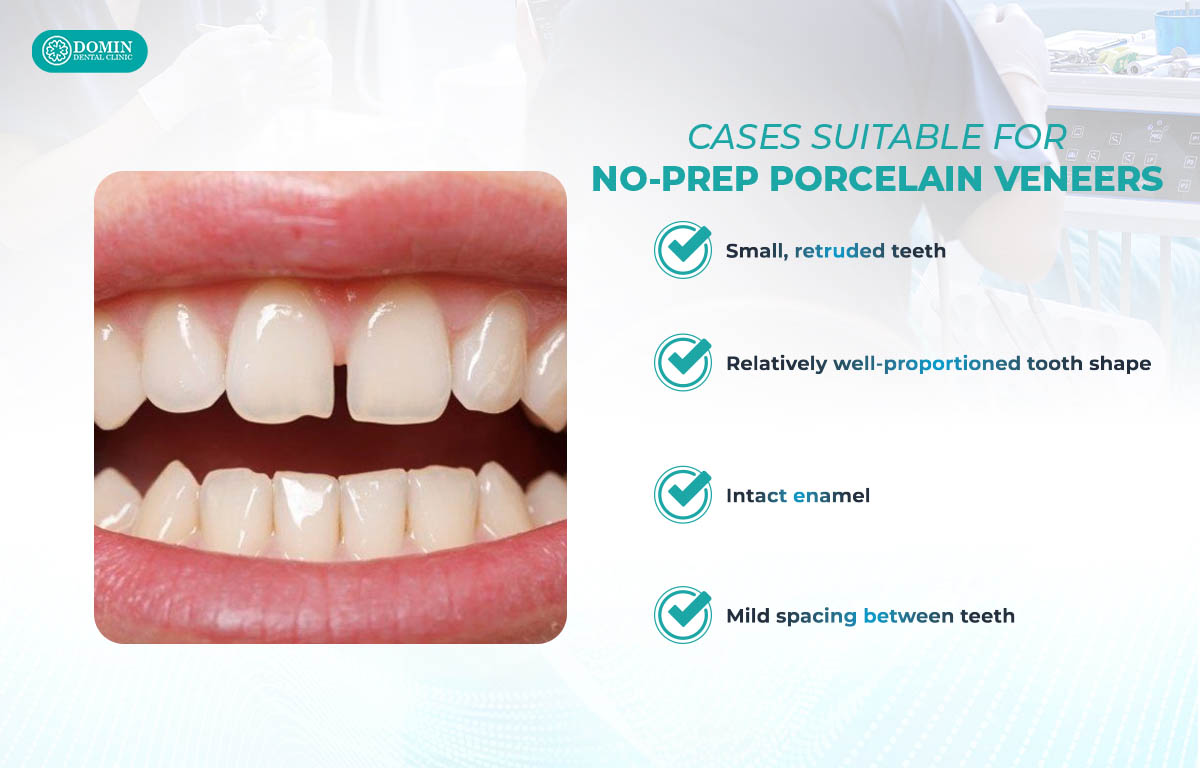
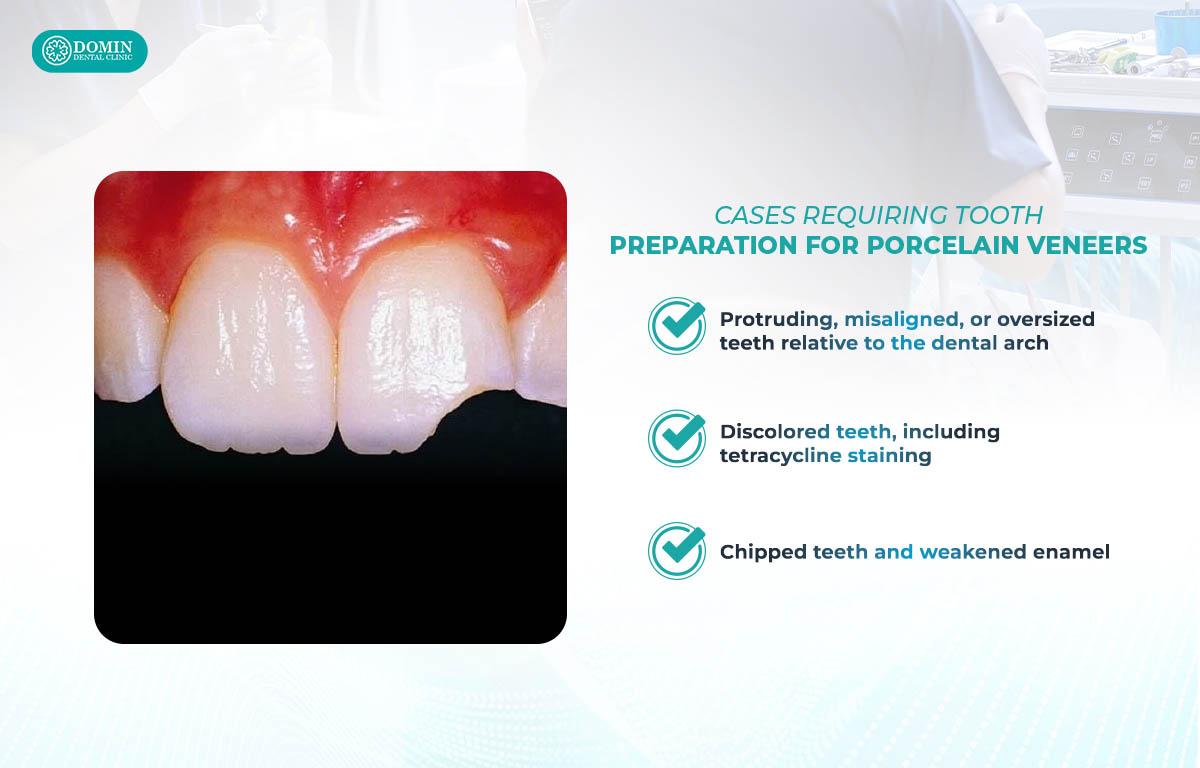


If the tooth surface is not properly treated, the bonding between the veneer and enamel will not be optimal. Over time, the veneer may debond, develop open margins, or discolor at the edges, compromising aesthetics and increasing the risk of gum inflammation.
Limitations in coverage and reshaping ability
Due to their ultra-thin thickness, veneers cannot fully mask major defects or severe discoloration. In such cases, minimal preparation is necessary to create space for the veneer to achieve proper aesthetics and translucency.
In essence, no-prep porcelain veneers are not a “miracle” technique, but a selective indication. Achieving optimal results depends entirely on accurate clinical assessment, proper smile design, and the dentist’s skill in controlling tooth structure at a microscopic level.
What truly matters is not whether teeth are prepared or not, but whether tooth structure is preserved according to biological principles while still ensuring long-term aesthetics and function.
Technology supporting safe no-prep porcelain veneers
Technology plays a key role in helping dentists achieve optimal aesthetics while maintaining the principle of preserving natural tooth structure. The technologies currently applied in veneer placement include:
Digital Smile Design
Before deciding whether no-prep veneers can be performed, the dentist must carefully analyze facial structure, smile, and the position of each tooth.
The Digital Smile Design system allows accurate simulation of the ideal smile on the patient’s face, thereby determining:
• Which teeth can receive veneers without preparation.
• Which areas require minimal preparation to ensure aesthetic balance and proper occlusion.
3D scan data helps reproduce the entire structure of teeth, gums, and occlusion in three-dimensional space. Thanks to this, the dentist can control veneer thickness for each tooth, minimizing invasiveness while still ensuring precise fit and durability.
High-precision CAD/CAM fabrication system
CAD/CAM technology enables veneer fabrication with near-perfect accuracy, with errors measured in microns. As a result, the veneers fit perfectly onto the natural tooth surface, reducing the risk of open margins or discomfort after placement. In addition, the high precision of CAD/CAM allows for ultra-thin veneers, making it possible in many cases to place them without preparation.
Digital impression technique
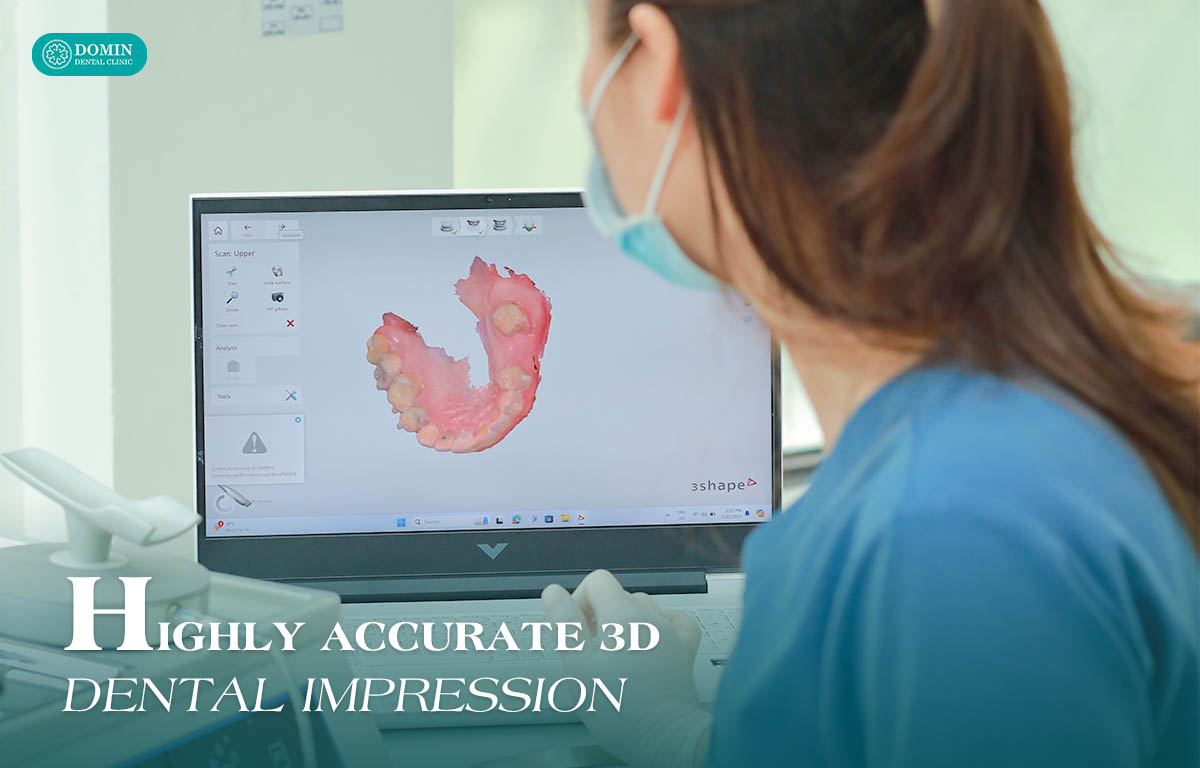
Instead of traditional silicone impressions, intraoral scanning with digital scanners allows highly accurate data collection of tooth structures without causing discomfort to patients.
The data is transmitted directly to the veneer design system, minimizing discrepancies between natural teeth and veneers, ensuring precise fabrication, and reducing treatment time.
Modern technology not only makes the “no-prep veneer” technique more feasible but also significantly reduces clinical risks. However, regardless of how advanced the technology is, the key to success still lies in the dentist’s analytical skills, occlusion control, and clinical experience.
No-prep porcelain veneers are a delicate technique that requires a combination of precise technology and advanced aesthetic thinking. When properly indicated, the results provide not only a beautiful smile but also a safe, durable, and biologically sound restoration.
Domin Dental Clinic, with its team of experienced dentists, refined aesthetic sense, and modern technology, is committed to delivering a harmonious, natural smile that fits facial proportions.
In summary: No-prep porcelain veneers represent a modern advancement in cosmetic dentistry, aiming to preserve natural teeth while achieving high aesthetic results. However, not everyone is suitable for this technique. A thorough examination and accurate assessment of tooth condition—including alignment, color, and enamel structure—are essential for proper indication.
If you are considering no-prep porcelain veneers, choose a reputable dental clinic with experienced specialists and digital smile design technology. This ensures not only natural aesthetic results but also long-term oral health.