Tiếng Việt

The time required for porcelain veneers is not long, but to achieve perfect fit, natural translucency, and long-term stability, the process must be carried out precisely in each stage. Typically, a complete veneer treatment takes about 2–3 days, including consultation, smile design, and final bonding.
For cases with higher aesthetic demands, severe discoloration, complex corrections, or a larger number of veneers, the timeline may extend to 3–7 days to ensure optimal precision and aesthetics.
At dental clinics that apply CAD/CAM technology, veneer fabrication can be reduced to just 24 hours, making it ideal for busy patients who still want a natural, beautiful smile.
👉 In general, how long veneers take depends on:
- Initial tooth condition
- Number of veneers
- Fabrication technology
- Dentist’s expertise
The key is not speed, but precision, ensuring veneers are durable, natural, and long-lasting.
Detailed timeline of the veneer process
The veneer procedure is divided into several stages, each playing a crucial role in achieving maximum accuracy, aesthetics, and durability:
Examination, X-rays, and treatment planning (20–30 minutes)
During the first visit, the dentist evaluates overall oral health, enamel condition, misalignment, discoloration, and bite. X-rays and 3D scanning are performed, followed by discussion of the treatment plan.
👉 This step determines the long-term success and natural outcome of the veneers.
Minimal tooth preparation (30–60 minutes per arch)
Veneers require only a very thin enamel reduction, typically 0.1–0.3 mm. The dentist carefully prepares each tooth to preserve maximum natural structure and minimize sensitivity. In ultra-thin cases, this step can be even quicker.
Digital impressions / 3D scanning and veneer design (15–20 minutes)

After tooth preparation, the dentist takes impressions or performs digital scanning to send data to the lab. This information is used to design veneers with optimal fit and color matching.
Veneer fabrication at the lab (1–3 days)
This is the most time-consuming stage. Veneers are crafted either manually by technicians or using advanced CAD/CAM technology. The duration depends on the number of veneers, aesthetic requirements (translucency, gloss, shade), and the lab’s technology.
👉 With high-end CAD/CAM systems, veneers can be completed within 24 hours.
Veneer try-in and adjustments (20–40 minutes)
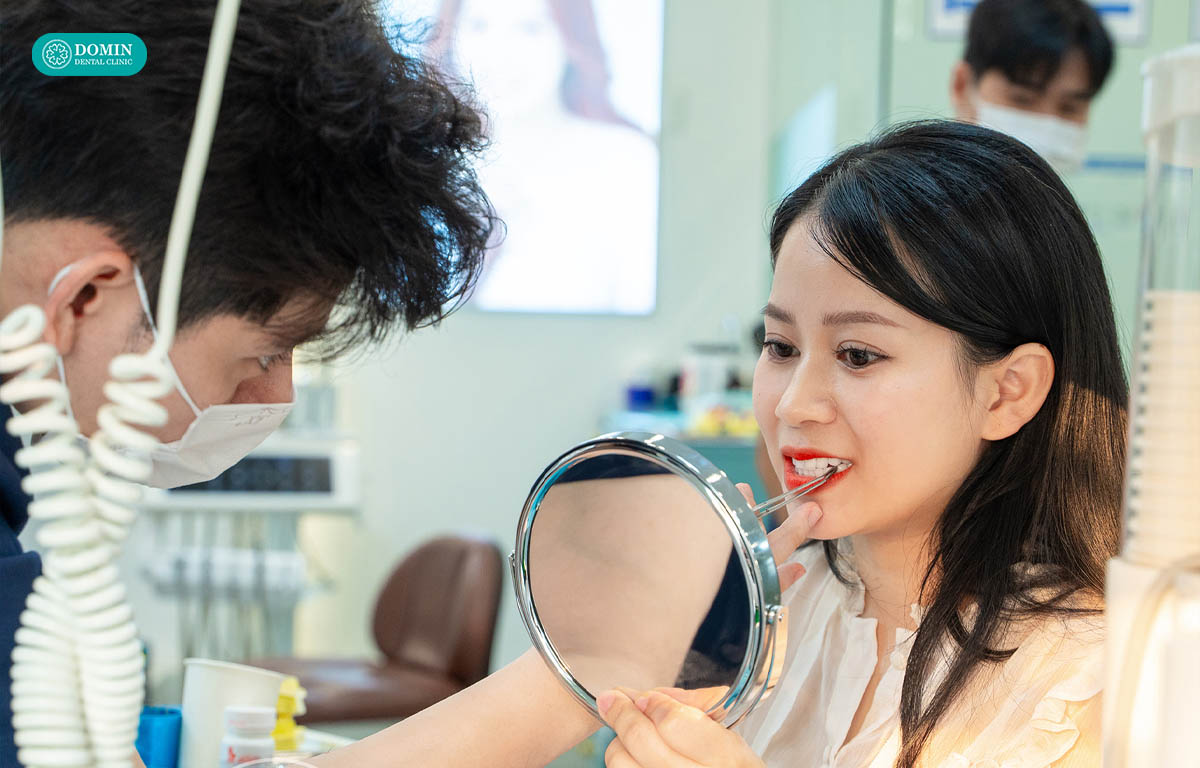
Before permanent bonding, the dentist places the veneers on the natural teeth to evaluate the fit, harmony with the gum line, translucency, gloss, and color compared to natural teeth. At the same time, the bite is checked to ensure there is no discomfort or interference during chewing.
If any detail does not meet aesthetic or functional standards, the veneer will be adjusted immediately to achieve the best possible result before final bonding.
Permanent veneer bonding (30–45 minutes)
Veneers are bonded using specialized dental adhesive and cured with a light to strengthen the bond. The dentist then performs a final bite check and makes precise adjustments to ensure comfort and stable chewing function.
Does veneer treatment time vary?
Besides asking how long veneers take, many people wonder why some cases are completed in 2 days, while others may take up to a week.
In reality, the treatment time is not fixed and depends on:
- Initial tooth condition
- Number of veneers
- Technology and workflow used by the dental clinic
For teeth that are well-shaped, healthy, and require minimal correction, the process can be completed quickly within 2–3 days.
However, in cases of severe discoloration, mild misalignment, bite correction, or multiple restorations, the timeline may extend to 3–7 days to ensure optimal precision and aesthetics.
Technology is also a key factor. Clinics equipped with 3D scanning, digital design, and CAD/CAM systems can complete veneers within 24 hours, while traditional labs may require more time.
Tips to speed up veneer treatment
You can shorten the treatment time by preparing well from the beginning:
- Schedule an early consultation and imaging for accurate diagnosis
- Cases with healthy enamel, stable bite, and minimal discoloration are suitable for faster veneer treatment
- If there are issues such as cavities, gum inflammation, bite problems, or teeth grinding, these must be treated first
👉 Proper preparation ensures not only faster treatment but also long-term durability and optimal results.