Tiếng Việt
Many people are concerned about the durability of porcelain veneers due to their thin design. So, are veneers durable? Below is a detailed explanation to help you understand their lifespan, care methods, and the key factors that determine their longevity.
Are porcelain veneers durable?
One of the most common questions is whether veneers are truly durable. In reality, the longevity of veneers depends on several factors, including ceramic material, bonding technique, the condition of natural teeth, and oral care habits.

High-quality veneers, such as glass-ceramic materials, offer excellent strength and wear resistance, helping maintain their shape and color over time. In contrast, low-quality materials or improper bonding techniques can lead to chipping, cracking, or marginal gaps—affecting both aesthetics and function.
According to Dr. Doan Xuan Truong, a cosmetic restoration specialist at Domin Dental Clinic:
“Porcelain veneers can last over 10 years, even up to 15–20 years when properly indicated and well maintained. The most important factor is precise control of occlusion and marginal fit, as these determine the long-term stability of the veneers.”
In addition, the condition of natural teeth plays a crucial role. Healthy teeth with proper bite alignment allow veneers to perform optimally, while weak teeth, malocclusion, or habits like teeth grinding can increase the risk of damage. Proper care is also essential: avoid biting hard objects, limit chewing ice, maintain good oral hygiene, and attend regular dental check-ups.
When all these factors are well managed, the answer to “Are veneers durable?” is clear—veneers can be highly durable, lasting 10–20 years while maintaining a natural, aesthetic, and stable smile over time.
Are veneers as durable as dental crowns?
When comparing porcelain veneers and dental crowns, it is important to understand the biological and technical differences between these two restorative methods.
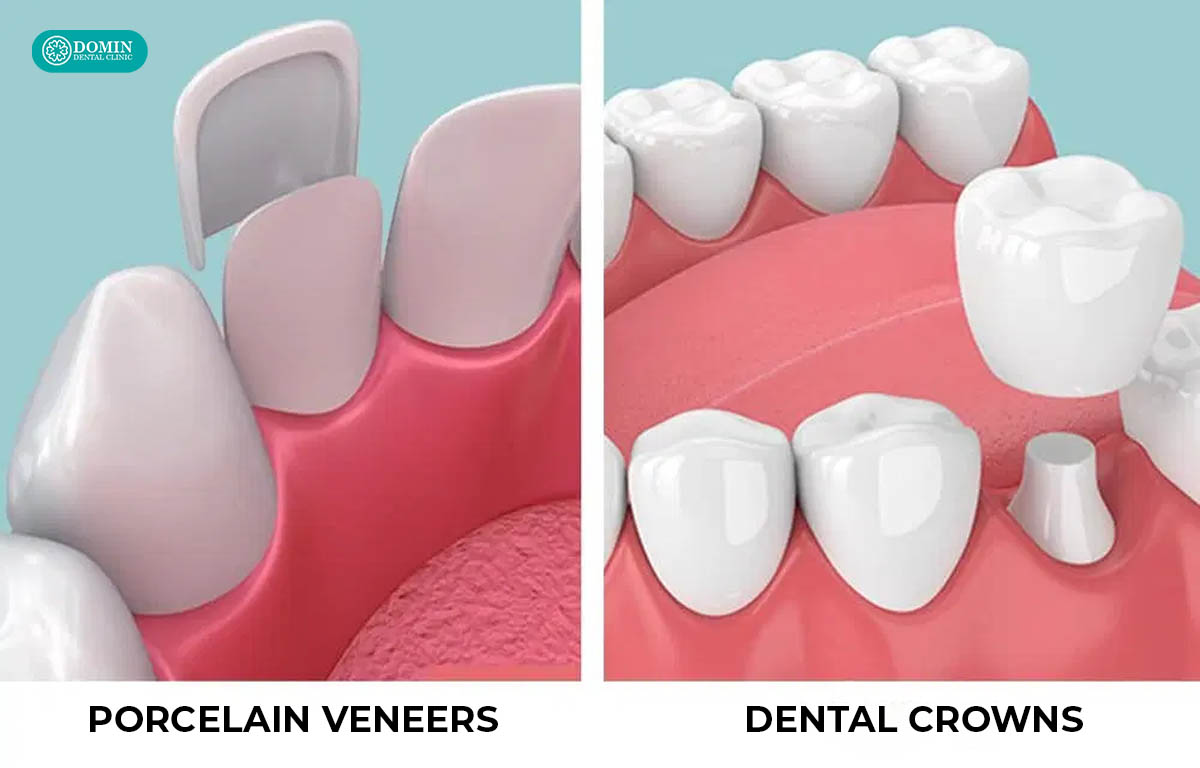
Porcelain veneers involve bonding a thin layer of ceramic (approximately 0.3–0.5 mm) to the front surface of the tooth. The main goal is to improve color and shape while preserving almost all of the natural enamel. When bonded with specialized adhesive, veneers create a strong chemical bond between the enamel and ceramic—ensuring stability and resistance to debonding when performed correctly.
In contrast, dental crowns cover the entire tooth, requiring more tooth reduction. Their advantage lies in reinforcing weakened teeth, especially in cases of severe damage, large decay, fractures, or when bite correction is needed. Because crowns fully encase the tooth, they generally offer greater resistance to heavy chewing forces.
However, the durability of both veneers and crowns depends primarily on three key factors:
1. Condition of the natural tooth
If the tooth is healthy, with strong enamel and proper bite alignment, veneers can be just as durable as crowns.
2. Material quality and bonding technique
Veneers rely on specialized bonding systems, requiring precise surface preparation to ensure long-term adhesion.
3. Care and maintenance
Both veneers and crowns can last 10–20 years or more with proper oral hygiene, eating habits, and regular dental check-ups.
👉 Conclusion:
Veneers are not less durable than crowns—they are simply designed for different cases.
- If teeth are healthy and do not require major structural correction, veneers are a conservative, natural, and long-lasting option.
- If teeth are weak or heavily damaged, crowns provide stronger protection and reinforcement.
How to maintain long-lasting veneers
According to cosmetic dental experts, veneer durability depends not only on materials or technology, but also on daily care habits. With proper indication and maintenance, both veneers and crowns can last 10–20 years or even longer.

Dentists recommend maintaining the following habits after getting porcelain veneers:
- Avoid using your teeth to bite hard objects or open items
- Limit very chewy, extremely hot, or very cold foods
- Use a soft-bristled toothbrush, dental floss, and a water flosser to clean thoroughly between teeth
- Most importantly, schedule regular check-ups every 6 months to monitor veneer fit and gum health
As Dr. Truong emphasizes, the durability of veneers does not depend solely on materials or technology, but mainly on precision during the procedure and the patient’s oral care habits.
Therefore, choosing a reputable clinic, a highly skilled dentist, and maintaining proper oral hygiene are the key factors to ensuring long-lasting, beautiful veneers. When done and cared for correctly, veneers can maintain their durability, aesthetics, and chewing function for many years.
👉 Conclusion:
Porcelain veneers are indeed durable, with a lifespan of 10–20 years when all essential factors—dentist expertise, technology, materials, and proper care—are fully met.
If you are wondering whether veneers are suitable for you, contact Domin Dental Clinic today for a personalized consultation.