Tiếng Việt
Full-arch porcelain veneers are considered a comprehensive cosmetic solution for those who want a bright, even, and natural-looking smile without extensive alteration of natural teeth. So, what exactly are full-arch veneers, who are they suitable for, and how is the procedure performed?
What are full-arch porcelain veneers?
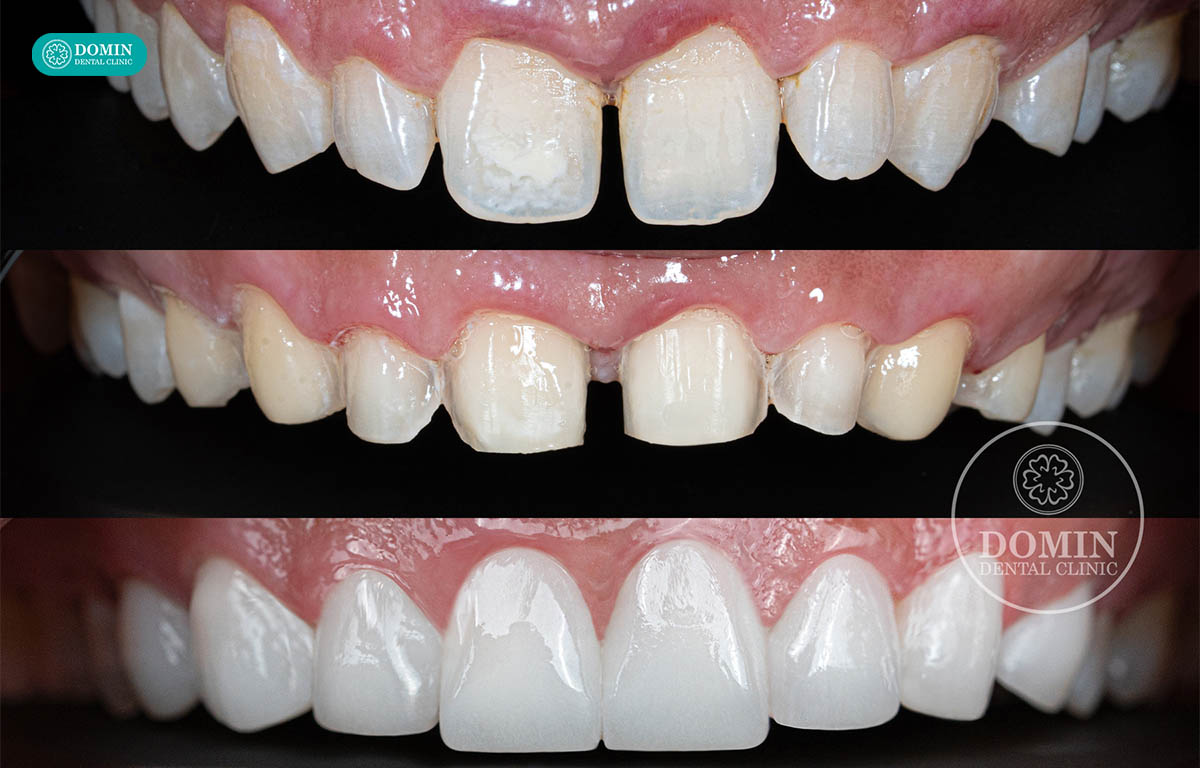
Full-arch porcelain veneers are a modern technique that uses ultra-thin porcelain shells, typically 0.2–0.5 mm thick, bonded to the front surfaces of all teeth in the smile zone. The goal is to improve tooth shape, color, and alignment, creating a brighter and more harmonious smile while preserving almost the entire natural tooth structure underneath.
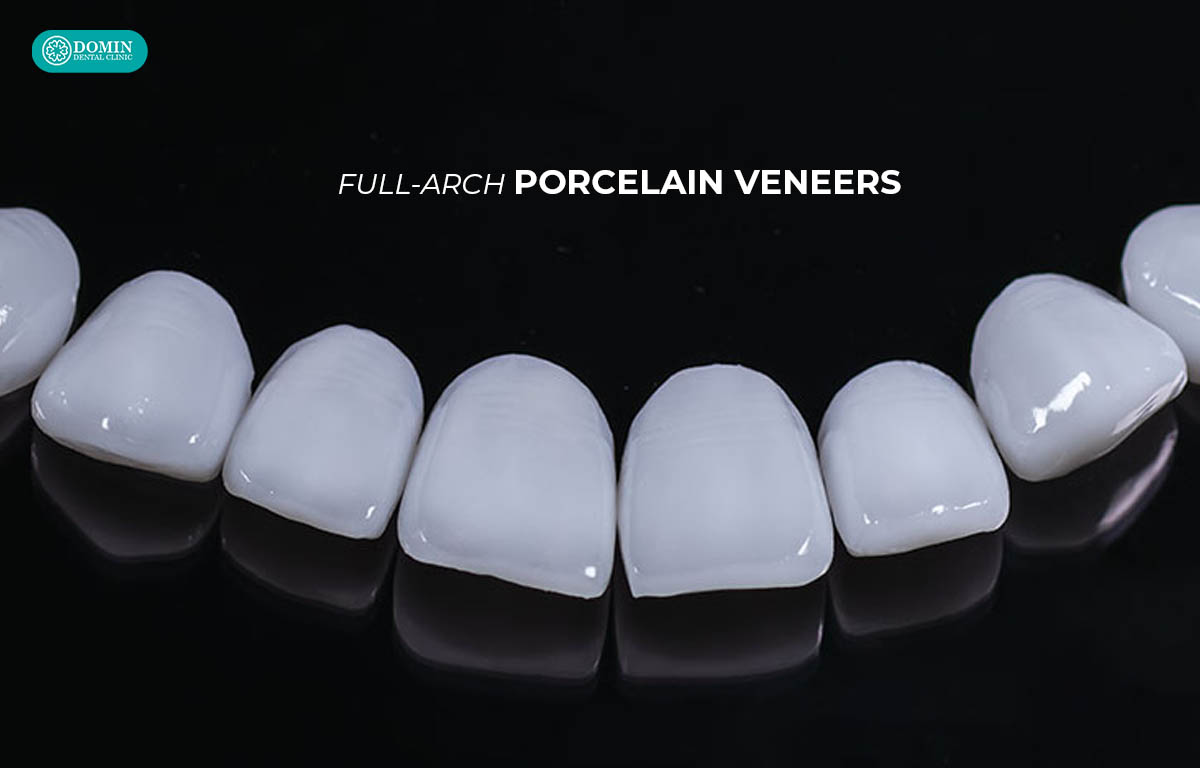
Modern veneers are fabricated from high-quality ceramic materials such as glass-ceramics (e.g., Emax, Celtra Press) or lithium disilicate. These materials offer high optical translucency, allowing light to reflect similarly to natural enamel, while also providing excellent strength, durability, and load-bearing capacity for long-term aesthetic and functional results.
In terms of procedure, full-arch veneers are not simply about bonding porcelain onto teeth. They involve a comprehensive smile design process, including adjustments to tooth shape, proportions, gum contours, brightness, and overall harmony with the patient’s facial features.
As a result, full-arch veneers are considered a premium aesthetic solution, capable of recreating a natural, balanced, and internationally standardized smile.
Who is suitable for full-arch veneers?
Full-arch veneers are typically indicated for patients whose teeth are still structurally healthy and not severely damaged, but who want a comprehensive improvement in color, shape, and smile proportions. Common cases include:
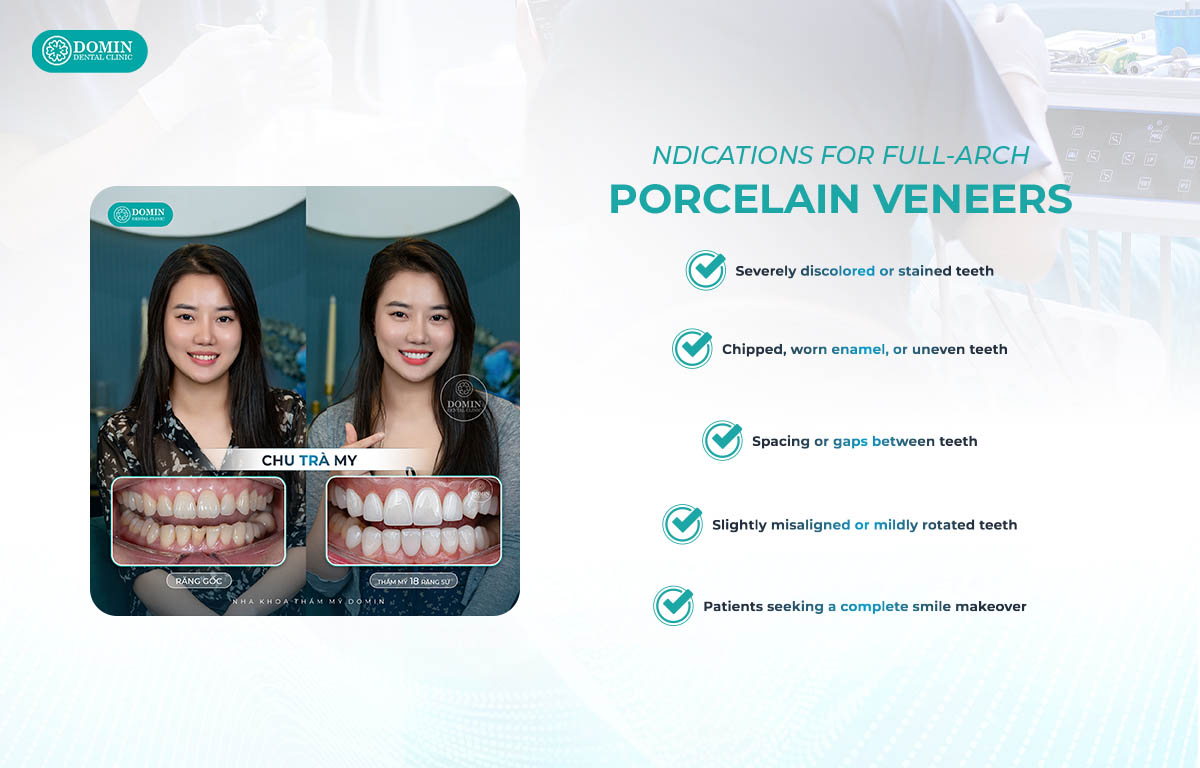
Severely discolored or stained teeth
• Cases of deep discoloration caused by tetracycline, fluoride, long-term smoking, or frequent coffee consumption.
• When whitening is no longer effective, veneers can fully mask discoloration and restore natural brightness and translucency.
Chipped, worn, or uneven teeth
• Teeth worn down due to improper brushing, grinding, or minor trauma.
• Irregular tooth shapes, with some teeth smaller or shorter than others. Full-arch veneers help create uniform shape and length across the smile.
Gapped teeth or small spacing between teeth
Step 1: Examination and overall assessment
The dentist performs a comprehensive evaluation of the teeth and gums, including X-rays and intraoral/extrafacial photography to assess enamel thickness, occlusion, and smile proportions. Based on these findings, the dentist determines whether you are a suitable candidate for veneers and develops a personalized treatment plan tailored to your facial features and aesthetic goals.
Step 2: Smile design
Using the collected data, the dentist and technician simulate your new smile with digital software. Patients can preview the expected outcome, ensuring the final result aligns with their expectations and facial harmony.
Step 3: Tooth surface preparation
This step ensures proper adhesion and fit of the veneers. The dentist performs minimal enamel reduction or surface conditioning, with very conservative intervention that does not affect the pulp or internal tooth structure.
Step 4: Digital impressions
After preparation, a 3D intraoral scanner is used to capture precise impressions of the entire arch.
The data is sent directly to the dental laboratory, where each veneer is fabricated with near-perfect accuracy, ensuring a precise fit without gaps or discomfort.
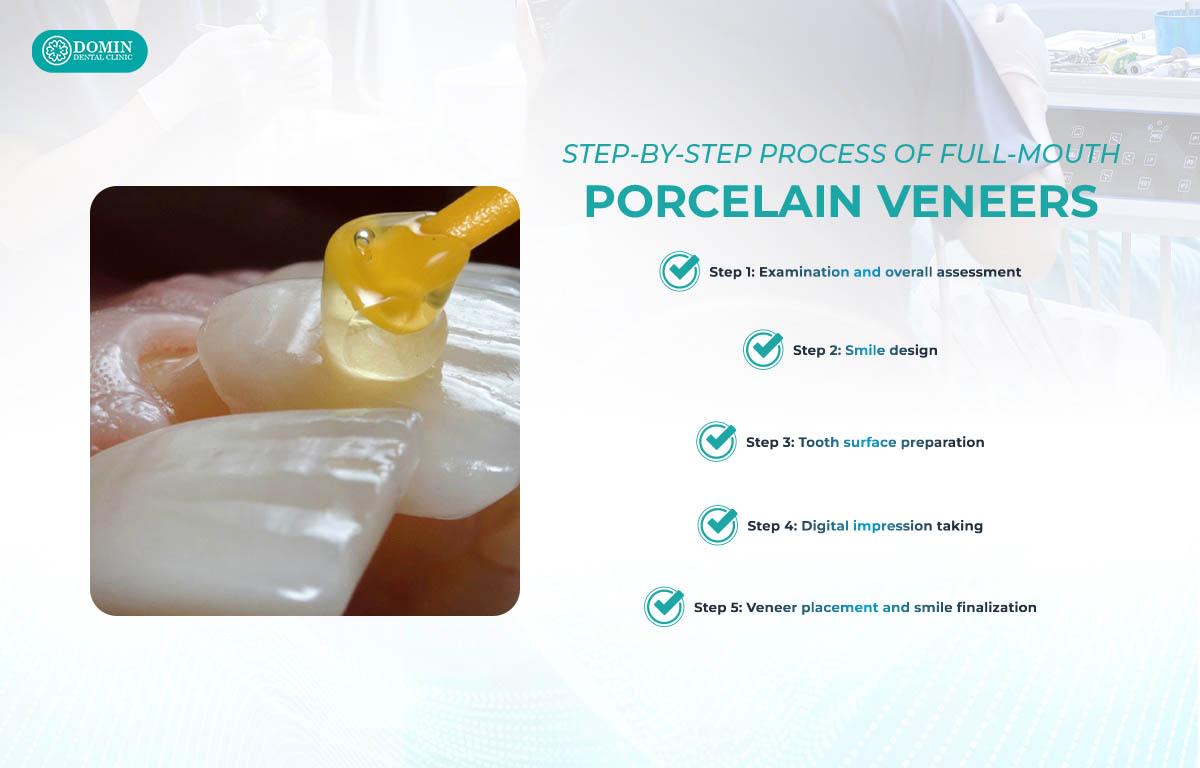
Step 5: Veneer placement and finalization
Once the veneers are ready, the dentist performs a trial fitting to check fit, color, and shape. After patient approval, the veneers are permanently bonded using specialized dental adhesive.
At the end of the procedure, patients receive care instructions and are scheduled for periodic follow-ups to maintain long-term aesthetics and durability.
Advantages of full-arch veneers
Full-arch porcelain veneers are considered a significant advancement in modern cosmetic dentistry, offering not only a transformed smile but also maximum preservation of natural tooth structure. Key advantages include:**

Preserves almost all natural tooth structure: Veneers only cover the outer surface of the tooth and do not require full tooth reduction, helping maintain natural enamel and pulp.
Natural aesthetics: High-quality ceramic materials offer excellent optical translucency, allowing light to pass through and reflect similarly to natural enamel.
Natural chewing sensation: Thanks to their thin structure, veneers do not alter occlusion, allowing comfortable chewing without bulkiness. At the same time, teeth retain their natural sensitivity and biological feel during eating.
Long lifespan and easy maintenance: Full-arch veneers can last 10–20 years while maintaining brightness and durability if properly performed and cared for.
It can be seen that full-arch veneers are not just a cosmetic technique, but a comprehensive smile transformation solution. However, this method is not suitable for everyone. Patients with severe misalignment, significant malocclusion, or weak enamel may not achieve optimal results and require thorough clinical evaluation.
Cost of full-arch veneers
Understanding the cost of full-arch veneers is not just about numbers—it also reflects the quality of materials, the dentist’s expertise, and the technology used in each case.
Currently in Vietnam, veneer costs range from approximately 6–12 million VND per tooth, depending on the material, fabrication technology, and the clinician’s experience. For a full-arch case (around 16 teeth in the smile zone), the total cost typically ranges from 100–200 million VND, and may be higher for premium materials or advanced digital smile design.
For example, at Domin Dental Clinic, Emax Press (Switzerland)—a premium ceramic known for its translucency and strength—is priced at 5,850,000 VND per tooth. For a full set of 16 teeth:
👉 5,850,000 × 16 = 93,600,000 VND
This results in an estimated total of 93.6 million VND for 16 Emax Press veneers, which is considered reasonable given the aesthetic outcome, durability, and overall quality.
The same pricing formula applies to other ceramic systems, depending on individual aesthetic goals and budget.
Post-care for full-arch veneers
After completing full-arch veneers, the most important phase is daily care rather than the clinical procedure itself. Below are key recommendations:
Control chewing forces and avoid harmful habits

Although veneers have high strength (comparable to natural enamel), they are thin and can be vulnerable to concentrated forces. Therefore, you should avoid biting hard objects or using your teeth to open bottles.
Maintain proper oral hygiene
After veneer placement, the margin between the veneer and natural tooth is a sensitive area where plaque can easily accumulate if not cleaned properly. You should:
- Use a soft-bristled, small-head toothbrush and brush gently along the vertical axis of the teeth.
- Use dental floss or a water flosser to clean between teeth—especially important for full-arch veneers, where contact points are tight.
- Choose a non-abrasive toothpaste to avoid scratching the porcelain surface.
Attend regular check-ups every 6 months
Routine follow-ups allow the dentist to evaluate the fit of the veneers, the condition of the surrounding gums, and overall occlusion. Any minor discrepancies, if detected early, can be promptly adjusted to prevent debonding, chipping, or gum inflammation caused by open margins.
Full-arch porcelain veneers are a premium aesthetic solution that helps recreate a natural, harmonious, and long-lasting smile. However, optimal long-term results can only be achieved when the procedure is performed with proper indications, by experienced clinicians, and followed by appropriate post-treatment care.
For a comprehensive evaluation and personalized consultation on full-arch veneers, you can contact Domin Dental Clinic to receive a free consultation and a tailored treatment plan today.