Home » PORCELAIN VENEERS » Are Porcelain Veneers Good? Top 3 Best Veneer Options Today
Are Porcelain Veneers Good? Top 3 Best Veneer Options Today
Last updated: 11/01/2025
Are porcelain veneers good? If you are looking for a dental aesthetic solution that is both natural-looking and minimally invasive, veneers are considered a modern dental standard that enhances your smile while preserving natural teeth.
Are porcelain veneers good?
To answer the question “Are porcelain veneers good?”, according to dentists at Domin Dental Clinic, veneers are effective—but only when performed with proper indication, correct technique, and by experienced dentists and laboratories.
Aesthetic benefits
Porcelain veneers are considered the “gold standard” in modern cosmetic dentistry thanks to their ability to restore the natural and refined beauty of real teeth.
Typically, veneers are made from high-quality glass-ceramic materials such as Emax and Lisi, which have translucency similar to natural enamel. This allows the teeth to achieve a natural brightness without appearing opaque or artificial under light.
In addition, veneers effectively cover aesthetic imperfections such as tooth discoloration, mild tetracycline staining, gaps, small chips, or uneven tooth shapes. With just a thin layer of porcelain (about 0.2–0.5 mm), the smile can be significantly improved while still maintaining a natural feel when speaking, smiling, and chewing.
Notably, veneers allow customization of tooth shape and shade to match facial proportions, skin tone, and each individual’s personal style.
Benefits in preserving tooth structure
One of the greatest advantages of porcelain veneers is their ability to preserve natural tooth structure almost completely. Unlike crowns, veneers require only minimal reduction on the outer surface, and in some cases, no preparation at all if the tooth shape and color are already suitable. As a result, the natural enamel and dentin are preserved, helping maintain tooth strength and minimizing the risk of sensitivity or pulp inflammation after restoration.
When the tooth structure is well preserved, the natural bite and function are also maintained. This not only ensures a natural chewing experience but also supports long-term oral health.
Long-term stability over time
Veneers are not only aesthetically pleasing but are also highly regarded for their mechanical durability and biocompatibility.
Porcelain veneers are not only an aesthetic solution but also a “conservative” restorative approach—meaning they enhance beauty while preserving natural teeth and maximizing what is inherently natural. In addition, this solution is highly regarded for its mechanical durability and biocompatibility.
Modern veneers are typically made from high-quality glass-ceramic materials with strength 4–5 times greater than natural enamel, allowing them to withstand chewing forces and resist fractures under normal use.
The average lifespan of veneers ranges from 10–15 years, and can even reach up to 20 years when properly placed and maintained. Their smooth, polished surface resists staining, does not discolor over time, and does not irritate the gums, helping maintain healthy teeth and gum tissues.
Moreover, veneers are highly biocompatible, do not produce odor, do not cause bad breath, and do not affect the surrounding soft tissues. This is why veneers are increasingly preferred in modern cosmetic dentistry.
Which veneer types are best today?
There are many types of veneers available on the market, but according to evaluations, three of the most popular and effective options today are Emax, Celtra, and Lisi. Each type has its own advantages, suitable for different needs and dental conditions.
Emax porcelain veneers
Emax porcelain veneers are a choice that delivers a natural, long-lasting smile.
Emax veneers are considered the gold standard in modern cosmetic dentistry. These veneers are made from lithium disilicate glass-ceramic, a material with high translucency and excellent light reflection, allowing them to replicate the natural light effect of real enamel.
In terms of durability, Emax is 3–4 times stronger than natural teeth, ensuring good resistance to chewing forces while remaining thin and lightweight without causing bulkiness. The average lifespan of Emax veneers ranges from 10–15 years, and can last even longer with proper care.
Emax is an ideal choice for those seeking comprehensive aesthetic improvement, aiming for a natural, refined, and long-lasting smile.
Celtra porcelain veneers
Celtra veneers are made from zirconia-reinforced lithium silicate (ZLS), a new-generation glass-ceramic strengthened with zirconia, offering a perfect balance between mechanical strength and natural aesthetics. With a flexural strength of over 500 MPa, Celtra veneers maintain stable chewing function even at a thickness of only 0.4–0.6 mm, helping preserve maximum natural tooth structure without causing discomfort.
In addition, thanks to its ultra-fine crystal structure, Celtra provides translucency and light reflection similar to natural enamel, creating a natural-looking smile under all lighting conditions. Notably, the chameleon effect allows the veneer to blend seamlessly with the natural tooth color, ensuring a harmonious result without visible margins.
With an average lifespan of 10–15 years, a smooth surface, and high resistance to chipping, Celtra is an excellent choice for those seeking a natural yet durable and safe smile over time.
Lisi porcelain veneers
Lisi veneers help you achieve a clear, natural smile like real teeth.
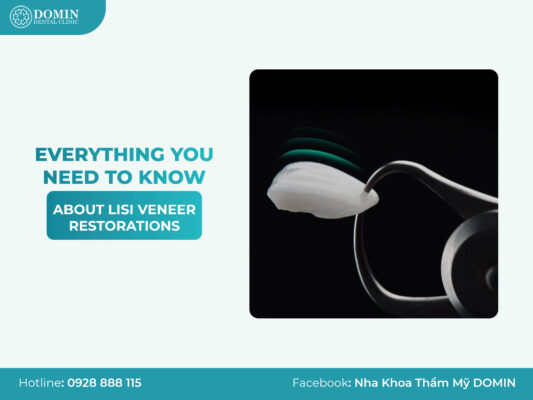
Lisi veneers are a premium product from GC (Japan), made from next-generation lithium disilicate material, offering a perfect combination of aesthetics, durability, and high precision.
The outstanding advantage of Lisi lies in its superior translucency and refined light reflection, making teeth appear clear and natural like real enamel after placement. Thanks to its ultra-fine crystal structure, Lisi veneers maintain long-term gloss and translucency without becoming dull or discolored over time.
In terms of strength, Lisi veneers have a flexural strength of over 450 MPa, making them durable enough for daily chewing while maintaining a thin thickness of only 0.3–0.5 mm, helping minimize tooth preparation. The smooth porcelain surface is highly biocompatible, does not irritate the gums, and does not cause margin discoloration over time.
With an average lifespan of 10–15 years and the ability to maintain a long-lasting shine, Lisi veneers are an ideal choice for those who desire a natural, subtle yet elegant and durable smile.
Where to get porcelain veneers
Are porcelain veneers good, and where is a reliable place to have them done? As analyzed above, veneers are truly an effective solution when performed with proper indication, correct technique, and by experienced dentists. However, to achieve optimal results in terms of aesthetics, durability, and safety, choosing a reputable dental clinic is the key factor.
Domin Dental Clinic is considered one of the pioneering and specialized providers in porcelain veneer treatments.
Among current providers, Domin Dental Clinic is considered one of the pioneers and specialists in porcelain veneer treatments. With a team of experienced dentists, precise techniques, and refined aesthetic sense, the clinic has helped thousands of clients achieve natural, elegant smiles that remain durable over time.
A distinctive advantage here is the application of modern technology and advanced veneer procedures, allowing for a completely painless experience without anesthesia, while still ensuring a precise fit, durability, and natural aesthetics.
With strong credibility and expertise, Domin Dental Clinic not only answers “Yes” to the question “Are porcelain veneers good?”, but also proves that “They are only good when you choose the right place.”
Porcelain veneer images always serve as visual proof of a dramatic smile transformation. At Domin Dental Clinic, many patients have experienced and clearly noticed the...
How Long Is the Warranty for Porcelain Veneers? Typically, the warranty period for porcelain veneers depends on the type of material chosen by the patient....
How Long Does Porcelain Veneer Treatment Take? Typically, porcelain veneers require 2–3 appointments or about 4 days to complete. The exact timeline depends on factors...
In addition to an experienced dentist, veneer technology is equally important, as it determines the precision, aesthetics, and durability of each veneer. So, what modern...
Studies show that 60–70% of post-veneer complications—such as debonding, chipping, discoloration, or gum inflammation—are caused by improper oral hygiene. This highlights how crucial aftercare is...
Lisi porcelain veneers are often referred to as “ultra-thin, highly translucent, and as durable as natural teeth.” But what makes Lisi veneers stand out? Should...


 Tiếng Việt