Tiếng Việt
Front teeth veneers are popular due to their ability to quickly enhance aesthetics, creating a brighter and more natural-looking smile. However, this method is not suitable for everyone—if applied incorrectly, it may weaken the teeth or compromise their natural appearance.
Why should you consider veneers for front teeth?

Porcelain veneers are a modern cosmetic technique in which the dentist bonds an ultra-thin ceramic layer (0.2–0.5 mm) to the front surface of natural teeth to improve color, shape, and natural brightness.
Unlike dental crowns, veneers preserve almost the entire natural tooth structure, minimize enamel reduction, and significantly reduce sensitivity. For front teeth, veneers are especially effective because:
- They directly impact facial aesthetics and the overall smile expression.
- Even correcting just the two front teeth can dramatically transform the smile while still maintaining a natural look without appearing “fake” or rigid.
Key factors for achieving beautiful front teeth veneers
The success of front teeth veneers depends on three main factors: tooth shape – technique – aesthetic perception.
Tooth shape and proportions of the front teeth



When tooth discoloration is moderate to severe—especially due to tetracycline or fluorosis—teeth whitening often does not achieve the desired results.
In such cases, veneers are the safest aesthetic solution, as they can fully mask discoloration while maintaining natural light reflection, which full crowns often cannot achieve.
Mild spacing or slight misalignment of front teeth
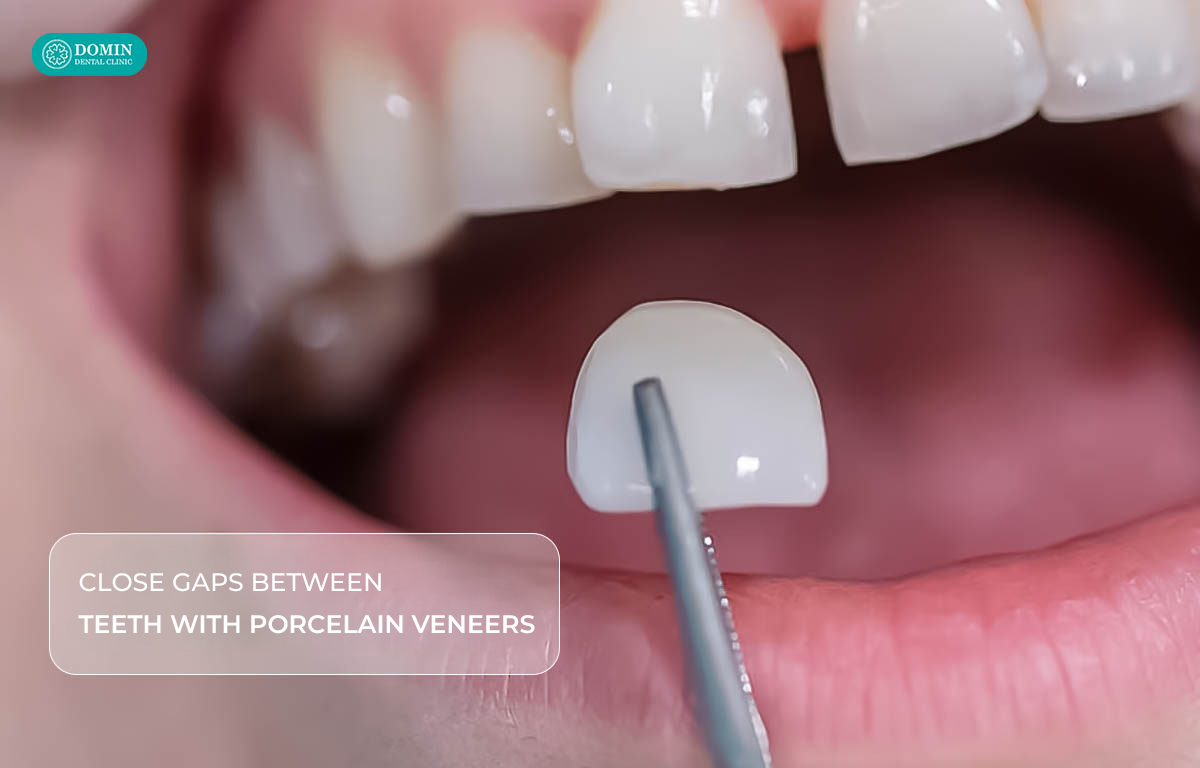
If the gap between the two front teeth is less than 2 mm, or if the teeth are slightly rotated or tilted, veneers can subtly adjust tooth shape and alignment, creating a more even and seamless smile without the need for orthodontics.
However, in cases of severe misalignment or significant bite issues, dentists may recommend orthodontic treatment before veneers to ensure long-term stability and optimal results.
Worn enamel, sensitivity, or minor cracks in front teeth
These teeth are at higher risk of further damage if not treated promptly.
In such cases, veneers act as a protective layer, restoring enamel thickness, reducing sensitivity, preventing further damage, and improving smile aesthetics.
Previously crowned front teeth seeking a more natural look
Some patients who previously had full crowns may find their teeth appear “artificial,” opaque, or have dark gum margins due to thick ceramic layers.
If sufficient tooth structure remains, switching to thin veneers can provide a more natural appearance, better light reflection, and a more realistic feel.
Note: Veneers are not always the best option. If front teeth have severe decay, large fractures, or weak enamel, full crowns may be recommended for durability. Conversely, if the teeth are still strong and well-shaped, veneers are the optimal solution—minimally invasive and highly preservative of natural tooth structure.
Cost of front teeth veneers
The cost of front teeth veneers typically ranges from 7,000,000 to 15,000,000 VND per tooth, depending on the ceramic material, fabrication technology, and case complexity.
At Domin Dental Clinic, patients can choose from various veneer options to suit both aesthetic goals and durability needs:
- Emax Veneers – approximately 7,000,000 VND per tooth
- Emax Press – approximately 9,000,000 VND per tooth
- Lisi Veneers – approximately 12,000,000 VND per tooth
- Lisi Press – approximately 15,000,000 VND per tooth
It is important to understand that a beautiful smile never comes from choosing the cheapest option. Instead of seeing veneers as just a piece of ceramic, consider them as a refined result of craftsmanship and aesthetic expertise.
A skilled dentist does not simply make teeth look better, but creates a smile that harmonizes with the face, eyes, and overall expression of each individual.
The true value of front teeth veneers lies in the dentist’s skill, experience, aesthetic philosophy, and the use of high-quality materials. Ultimately, beautiful teeth are not the whitest—but the most natural, harmonious, and confidence-boosting when you smile.
Aftercare for front teeth veneers
After the procedure, your front teeth are protected by an ultra-thin ceramic layer (0.2–0.5 mm). Although durable, veneers still require proper care to maintain their strength, shine, and resistance to plaque over time.
Maintain proper oral hygiene

After veneer placement, oral hygiene should be performed more carefully than with natural teeth. Dentists recommend using a soft-bristled, small-headed toothbrush to effectively clean along the gum line without scratching the thin ceramic surface.
At the same time, a non-abrasive toothpaste is ideal for maintaining the natural gloss of the veneers and preventing dullness over time.
In addition to proper brushing, you should also use dental floss or a water flosser. These are essential tools for removing plaque in interdental areas—where toothbrushes cannot reach—while helping prevent gum inflammation and discoloration around the veneer margins.
Protect veneers from excessive biting forces
Front veneers should not be used to bite hard foods such as nuts, bones, or ice. Even a slight off-axis force can cause chipping or cracking at the veneer edges.
If you have a habit of grinding your teeth at night, your dentist may recommend a custom night guard to protect the veneers and reduce stress on the bite.
Maintain regular check-ups every 6 months
Routine dental visits allow the dentist to monitor veneer fit, gum health, and overall occlusion. These appointments also include professional polishing to restore the shine and smoothness of the ceramic surface.
Regular check-ups help extend the lifespan of veneers to 10–15 years or more without the need for replacement.
In summary:
Front teeth veneers are not just a cosmetic solution—they are an art of smile design, where every detail, proportion, and light reflection is carefully planned. A successful veneer case depends not only on the material but also on how well the dentist understands your smile.
Therefore, choose a dental clinic with strong expertise and refined aesthetic sense, so that every smile you share looks natural, confident, and long-lasting. Domin Aesthetic Dental Clinic is one of the leading centers in veneer dentistry, ready to accompany you on your journey to creating a personalized, signature smile.