Tiếng Việt
The porcelain veneer process is standardized into five essential steps.
At Domin Dental, we combine 3D scanning technology, tooth preservation techniques, and a minimally invasive aesthetic approach — allowing you to achieve a natural, harmonious, and long-lasting smile in just two appointments.
How Does the Veneer Procedure Work?

Porcelain veneer placement is a highly precise cosmetic dental procedure that requires both technical expertise and artistic skill from the dentist.
At reputable dental clinics like Domin Dental, the procedure is standardized into five professional steps to ensure safety, comfort, and a naturally beautiful, long-lasting smile.
Step 1: Comprehensive Examination, Consultation, and General Treatment
During the initial stage, the dentist performs a thorough examination of the teeth, gums, and bite alignment while discussing the patient’s aesthetic expectations.
Based on this assessment, a personalized treatment plan is created to optimize both function and aesthetics.
If any oral health issues such as tooth decay, gingivitis, or periodontitis are detected, the dentist will address them first to eliminate inflammation and potential risks.
At the same time, the mouth will be professionally cleaned to minimize bacterial presence, creating a safe biological foundation for veneer bonding and preventing future complications after restoration.
Step 2: Minimal Tooth Preparation

To ensure a stable bond and achieve optimal aesthetic results, the dentist will gently reshape the enamel surface in a controlled manner, typically removing 0.2–0.5 mm depending on each clinical case.
This minimally invasive technique allows for maximum preservation of natural tooth structure while maintaining the biological sensitivity and integrity of the enamel.
Throughout the procedure, specialized dental equipment and local anesthesia (if necessary) are used to minimize discomfort and ensure a completely pain-free experience for the patient.
Step 3: Impression Taking and Veneer Fabrication
Once the tooth preparation is complete, the dentist takes an accurate impression of the dental arch, using either specialized dental materials or advanced intraoral 3D scanning technology to capture precise tooth morphology.
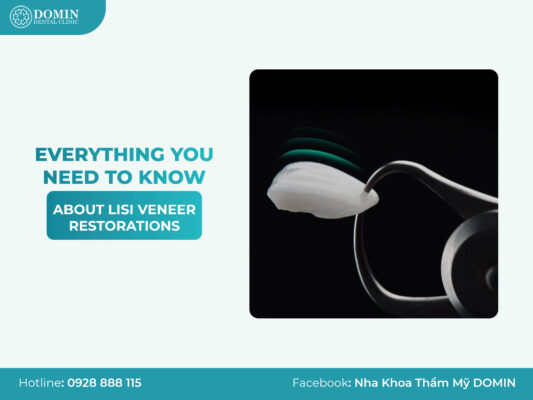
This digital data is then sent to the dental laboratory (Labo), where veneers are crafted using high-quality porcelain materials such as Emax, Lisi, or Celtra.
The veneer design process requires close collaboration between the clinical dentist and the dental technician, ensuring that each veneer achieves perfect harmony in size, color, translucency, and light reflection.
This precision is what determines the natural appearance and biocompatibility of the final veneer once bonded to the real tooth.
Step 4: Veneer Try-In and Evaluation
After the veneers are completed at the laboratory, the dentist will try them on the patient’s teeth to evaluate their fit, color accuracy, and overall harmony with the smile and facial features.
This is a crucial step to assess both the aesthetic integration and biological compatibility of the veneers.
If necessary, fine adjustments will be made to achieve absolute precision before proceeding to the final bonding stage.
Step 5: Final Bonding and Restoration Completion
Once the veneers meet all quality and aesthetic standards, the dentist prepares both the tooth surface and the inner side of the veneer using specialized bonding agents to optimize the chemical adhesion between the veneer and enamel.

The veneers are then bonded using dental adhesive cement, either light-cured or dual-cured, ensuring a strong and long-lasting bond.
A curing light is used to completely harden the adhesive, followed by precise bite adjustments to guarantee optimal chewing comfort and functionality.
After the procedure, patients receive detailed post-care instructions on maintaining oral hygiene and are advised on periodic check-up schedules to monitor veneer stability and longevity.
Key Factors in a Standard Veneer Procedure
A successful porcelain veneer procedure involves more than just following the technical steps — it depends on several critical factors that ensure both aesthetic excellence and long-term durability.
1. Maximum Preservation of Natural Tooth Structure
The most important principle of veneer dentistry is minimal invasiveness.
Therefore, the dentist must precisely calculate the amount of enamel reduction, removing only a thin surface layer necessary for proper veneer adhesion while maintaining tooth strength and natural sensitivity.
2. Accuracy in Impression Taking and Veneer Fabrication

The impression or 3D scanning process must be performed with near-zero margin of error.
Even a slight discrepancy can lead to gaps between the veneer and tooth, which may cause food entrapment, gum inflammation, or reduced veneer longevity.
In the laboratory, veneers should be fabricated using premium porcelain materials and state-of-the-art technology to achieve optimal translucency, light reflection, and natural tooth anatomy.
3. Bonding Quality
The durability of a veneer depends entirely on the strength and integrity of the bond between the inner porcelain surface and the natural tooth structure.
The tooth surface must undergo a standard chemical treatment protocol, including:
-
Etching to create micro-roughness for mechanical retention.
-
Bonding to establish a stable intermediate adhesive layer.
Simultaneously, the inner surface of the veneer is treated with specialized silane agents to optimize the chemical reaction between porcelain and resin cement.
Using dental-grade bonding agents combined with light-curing technology ensures firm adhesion, mechanical strength, and long-term stability of the veneer restoration.
4. Bite Adjustment
No matter how beautiful the veneers are, improper bite alignment can still cause chewing discomfort and even veneer fractures.
Therefore, the dentist must carefully evaluate the occlusion, analyze the relationship between upper and lower teeth, and adjust the contact points to ensure even distribution of bite force, optimizing both functionality and longevity after restoration.
5. Post-Treatment Care and Maintenance
After the procedure, patients must receive proper oral hygiene instructions, including avoiding harmful habits such as biting hard objects or teeth grinding.
Regular check-ups every 6 months are essential to detect and resolve potential issues early, ensuring the veneers remain beautiful, durable, and stable over time.
The Domin Dental Difference in Veneer Treatment

At Domin Dental Clinic, the porcelain veneer procedure is optimized through a combination of cutting-edge technology and advanced clinical expertise, delivering a safe, minimally invasive, and highly aesthetic smile design experience.
1. Precision 3D Scanning Technology
Instead of traditional manual impressions, Domin utilizes digital 3D scanning, capturing highly accurate oral data with near-zero margin of error.
This ensures that each veneer is perfectly fitted, minimizing gaps and preventing food entrapment for optimal long-term comfort and hygiene.
2. Maximum Preservation of Natural Tooth Structure
Domin’s veneer protocol prioritizes minimal or even no tooth preparation whenever possible.
This approach helps preserve the natural enamel and dentin, protecting the integrity of the original tooth structure for long-term dental health.
3. Non-Invasive, Pain-Free Aesthetics
Thanks to precise preparation techniques, ultra-thin veneers, and gentle clinical procedures, patients can undergo veneer placement without the need for anesthesia in most cases.
This ensures a comfortable and seamless experience while achieving a naturally radiant smile.
4. Seamless Collaboration Between Dentist and Laboratory
A perfectly coordinated workflow between Domin’s clinical team and the dental laboratory guarantees that each veneer achieves ideal color, translucency, shape, and light reflection, resulting in exceptional aesthetic harmony.
5. Expert Dentists with Refined Aesthetic Sense
As one of the pioneers in veneer artistry, Domin Dental takes pride in its team of highly experienced cosmetic dentists who combine technical mastery with artistic vision.
Their ability to analyze facial proportions, tooth form, and color tone ensures that every veneer restoration looks naturally elegant, enhancing both the charm and balance of each patient’s smile.
If you desire a bright, confident, and naturally beautiful smile, experience the modern, safe, and precise veneer procedure at Domin Dental Clinic.
Book your consultation today to have our specialists examine your teeth and design a personalized smile tailored exclusively for you.