Home » PORCELAIN VENEERS » Porcelain Veneers vs. Dental Crowns: Which Is Better? A Detailed A-to-Z Comparison
Porcelain Veneers vs. Dental Crowns: Which Is Better? A Detailed A-to-Z Comparison
Last updated: 11/07/2025
Porcelain veneers and dental crowns are two popular cosmetic dental restoration methods today, both used to improve the shape and color of teeth. However, each technique has different characteristics and purposes.
What are porcelain veneers?
Thin and lightweight porcelain veneers ensure maximum preservation of natural teeth.
Porcelain veneers are an optimal cosmetic restoration technique that focuses on preserving natural teeth, and are considered by many modern dental experts as a major advancement in aesthetic dentistry.
Simply put, veneers are ultra-thin porcelain shells, typically only 0.2–0.5 mm thick, custom-designed for each tooth and bonded to the front surface of natural teeth using high-strength dental adhesive.
The key difference of this method lies in its philosophy of “maximum preservation of natural tooth structure.” Instead of reducing the entire tooth as in traditional crowns, veneers require only minimal enamel preparation to create sufficient bonding. As a result, the natural tooth structure is largely maintained, helping teeth remain strong and minimizing sensitivity.
Porcelain veneers are particularly suitable for:
• Discolored or stained teeth with healthy enamel. • Mild spacing, small chips, or slightly uneven teeth without the need for orthodontics. • Individuals seeking a natural, harmonious smile without an artificial appearance.
From a technical perspective, veneers are a combination of art and technology. Dentists must understand tooth morphology, facial proportions, and natural enamel color to design veneers with ideal thickness, translucency, and light reflection. In addition, veneer fabrication requires near-perfect precision—any deviation of even a fraction of a millimeter can affect occlusion or bonding durability.
What are dental crowns?
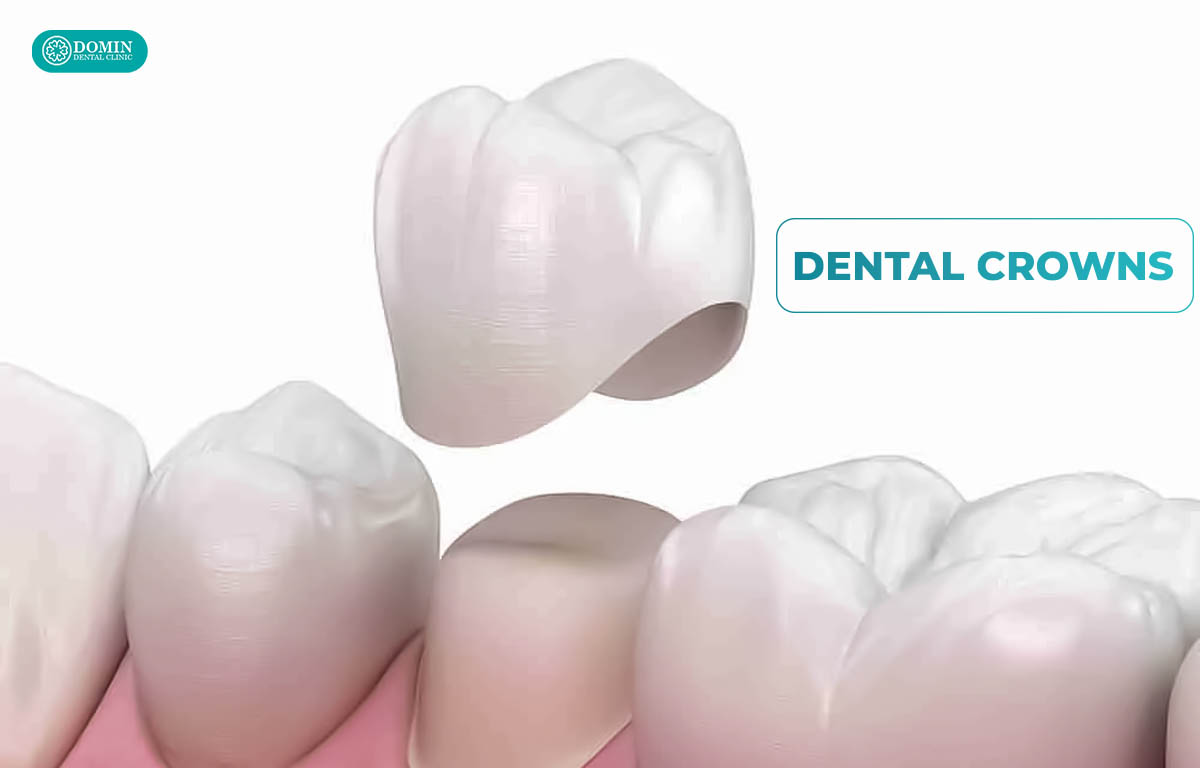
Dental crowns are a comprehensive restorative technique widely used in both cosmetic and therapeutic dentistry. Essentially, this method involves reducing the natural tooth structure (typically 0.8–1.5 mm) to create space, then placing a full-coverage crown over the prepared tooth. This crown acts as a protective “shield,” restoring both the shape and chewing function of the tooth.
Unlike veneers, which only affect the front surface, dental crowns cover the entire tooth structure. Therefore, they can reinforce weak, damaged, root canal–treated, or severely fractured teeth. This is what makes crowns the optimal choice when there is not enough healthy tooth structure to support veneers.
Dental crowns provide three main benefits:
• Restoration of structure and chewing function: crowns have high strength and load-bearing capacity, allowing teeth to function normally again, and in some high-quality materials, even stronger than natural teeth. • Comprehensive aesthetic restoration: dentists can adjust color, shape, length, and tooth alignment to create a harmonious, balanced, and brighter smile. • Protection of weakened teeth: full coverage helps prevent bacterial infiltration and reduces the risk of fractures or recurrent decay.
However, because significant tooth reduction is required, dental crowns demand a high level of skill and experience from the dentist to control preparation depth and avoid pulp damage. In addition, the choice of materials greatly affects durability and natural appearance.
In summary, dental crowns are a comprehensive solution for weak, damaged teeth or cases requiring major aesthetic correction, providing both beauty and long-term durability when performed correctly and properly maintained.
Detailed comparison between veneers and dental crowns
Although both aim to improve aesthetics and function, porcelain veneers and dental crowns are fundamentally different in terms of nature, level of invasiveness, and clinical indications. To better understand, let’s analyze the following criteria:
Criteria
Porcelain Veneers
Dental Crowns
Evaluation
Tooth reduction
Minimal or no preparation, only slight enamel adjustment
Significant reduction, covering the entire tooth
Veneers are suitable for intact teeth. For weak or damaged teeth, crowns are better to protect the structure.
Level of invasiveness
Minimal, maximum preservation of natural teeth
May affect deeper tooth structure
Veneers follow a “preservation” philosophy, while crowns focus on “full restoration.”
Durability and strength
10–15 years, suitable for front teeth
15–20 years, strong enough for both front and back teeth
For heavy chewing or posterior restorations, crowns are more suitable.
Aesthetics
Thin, translucent, natural light reflection like real enamel
Can fully reshape teeth, brighter and more noticeable
Veneers are ideal for a natural look, while crowns provide more dramatic transformation.
Indications
Healthy, aligned teeth needing minor color or shape improvement
Chipped, decayed, root canal–treated, or severely misaligned teeth
Correct indication ensures long-term durability and safety.
Treatment time
2–3 visits, relatively quick
2–4 visits, may require preliminary treatment
Both require precision, but veneers demand higher aesthetic finesse.
Cost
Usually higher due to precision and craftsmanship
More flexible depending on material and number of teeth
Veneers cost more not just for materials, but for technique and enamel preservation.
Should you choose veneers or dental crowns?
This is a question that almost anyone considering cosmetic dental treatment has asked. In reality, there is no absolute “better” option, because each method is designed for different purposes and dental conditions.
At Domin Dental Clinic, dentists do not make decisions based on personal preference, but on three core factors:
Current condition of natural teeth
If your teeth are healthy, have not undergone root canal treatment, have no structural damage, and only require minor changes in color or shape, then porcelain veneers are the optimal choice. Why? Because veneers preserve natural tooth structure, are minimally invasive, reduce the risk of sensitivity, and maintain a natural chewing feel.
On the other hand, if your teeth are weakened, have large decay, fractures, or significant misalignment, veneers may not provide sufficient strength. In such cases, dental crowns are a safer solution, restoring aesthetics while reinforcing tooth structure.
Aesthetic goals of the patient
Based on aesthetic goals, the dentist will determine whether veneers or crowns are more appropriate.
If you desire a natural, translucent smile that closely resembles real teeth, veneers are the ideal choice due to their enamel-like translucency and light reflection.
If you want a comprehensive smile transformation (brighter tooth shade, more uniform shape, improved bite and alignment), dental crowns can deliver faster and more dramatic results.
Technical factors and the dentist’s expertise
Both methods require highly skilled dentists with deep knowledge of occlusion, enamel, and facial aesthetics. With veneers, even a 0.1 mm error can result in poor fit, debonding, or margin discoloration. With crowns, excessive tooth reduction or incorrect occlusion can lead to sensitivity, temporomandibular joint pain, or reduced tooth longevity.
Therefore, what is “better” depends on choosing the right dentist and the correct indication—not on which method is more advanced or expensive.
According to dentists at Domin Dental Clinic: “Veneers are an excellent option when natural teeth are healthy. Crowns are a safer solution when teeth are weakened or require full restoration. The most important factor is not the method itself, but choosing a qualified provider who can deliver a beautiful and long-lasting healthy smile.”
What should you consider when choosing between veneers and dental crowns?
Below are important factors patients should carefully consider before deciding between veneers and dental crowns:
Do not choose a method before a professional examination
Many patients come to the clinic with the mindset of “choosing veneers to avoid tooth reduction” or “choosing crowns for a whiter, more even smile.”
However, only through clinical examination, X-rays, enamel evaluation, and occlusion analysis can the dentist determine the most appropriate treatment.
A weakened tooth, if forced to receive veneers, may easily debond or fracture. Conversely, placing a crown on a healthy tooth may unnecessarily remove natural tooth structure. Therefore, correct indication is the key to long-term success.
The dentist’s skill is the core factor
Both dental crowns and veneers require a highly skilled dentist with a refined aesthetic sense.
Both veneers and dental crowns are techniques that require precision down to fractions of a millimeter. Therefore, the dentist performing the procedure must have in-depth knowledge of occlusion, tooth orientation, enamel thickness, and facial morphology in order to design the most harmonious veneer or crown.
If these factors are not thoroughly understood, even a small error in preparation, bonding, or occlusal adjustment may lead to pain, sensitivity, gum inflammation, or reduced restoration longevity. Therefore, you should choose a dental clinic with dentists who specialize in cosmetic restorations, have formal training certificates, and many years of practical experience.
Fabrication technology determines precision and aesthetics
Modern veneers and crowns today are fabricated using 3D CAD/CAM technology, allowing precise design and production down to the smallest detail. In addition, laboratory systems and high-quality ceramic materials such as E.max, Lisi, and Celtra Press help ensure natural color, light reflection similar to real teeth, good chewing function, high mechanical durability, and long-term use.
Warranty policy and regular follow-up
A reputable clinic will have a clear warranty policy, remind patients of regular follow-up visits, and be ready to provide support if any dental problems arise. This is a major difference between professional dental clinics and low-cost cosmetic facilities that focus only on the initial price.
In summary, both veneers and dental crowns are effective solutions for significantly improving the smile. However, choosing the right technique not only enhances aesthetics but also ensures long-term oral health. Visit a reputable dental clinic to have your teeth, soft tissues, and occlusion properly evaluated, so the dentist can recommend the most suitable solution for you.
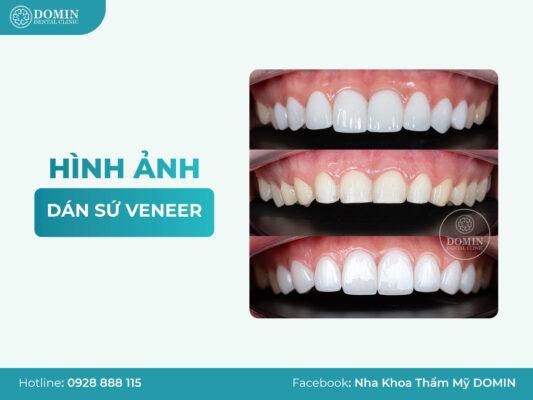
Porcelain veneer images always serve as visual proof of a dramatic smile transformation. At Domin Dental Clinic, many patients have experienced and clearly noticed the...
How Long Is the Warranty for Porcelain Veneers? Typically, the warranty period for porcelain veneers depends on the type of material chosen by the patient....
How Long Does Porcelain Veneer Treatment Take? Typically, porcelain veneers require 2–3 appointments or about 4 days to complete. The exact timeline depends on factors...
In addition to an experienced dentist, veneer technology is equally important, as it determines the precision, aesthetics, and durability of each veneer. So, what modern...
Studies show that 60–70% of post-veneer complications—such as debonding, chipping, discoloration, or gum inflammation—are caused by improper oral hygiene. This highlights how crucial aftercare is...
Lisi porcelain veneers are often referred to as “ultra-thin, highly translucent, and as durable as natural teeth.” But what makes Lisi veneers stand out? Should...


 Tiếng Việt