Tiếng Việt
Porcelain veneers are widely considered a fast and effective solution for achieving a brighter, more even, and aesthetically pleasing smile. However, when performed incorrectly or by an unqualified dental provider, this treatment can become a double-edged sword, potentially damaging your natural teeth.
So, what are the risks of porcelain veneers, and how can you minimize potential complications?
Common Side Effects of Porcelain Veneers
Porcelain veneer placement is a highly technique-sensitive procedure that requires precision in every step, including tooth preparation, smile design, shade matching, and bite alignment. If the process is not carefully controlled or applied to unsuitable cases, veneers can lead to several complications that directly affect the structure and health of natural teeth.
Some common side effects of poorly done veneers include:
Risk of Natural Enamel Loss

When it comes to veneers, people often think of “no tooth reduction” or “minimal tooth preparation.” So, do porcelain veneers require tooth reduction? To ensure stable bonding and optimal aesthetic results, the dentist must treat the enamel surface. This process involves removing a thin layer of enamel, typically about 0.2–0.5 mm, to create roughness and space for the veneer.
If the preparation exceeds the allowed limit, the protective enamel layer will become thin or be completely lost, exposing the dentin. As a result, the tooth becomes weaker, more sensitive, and difficult to restore to its natural condition. Once enamel is damaged, it cannot be regenerated.
Tooth sensitivity
Sensitivity is one of the most common reactions after veneer placement, especially if the preparation technique is not precise or the bonding is not perfectly sealed. The loss of enamel combined with microscopic gaps between the veneer and the natural tooth can expose dentin, leading to thermal, cold, or acidic stimulation, causing sensitivity when eating or drinking.
If not treated early, this condition can persist and affect quality of life.
Gum inflammation, gum recession
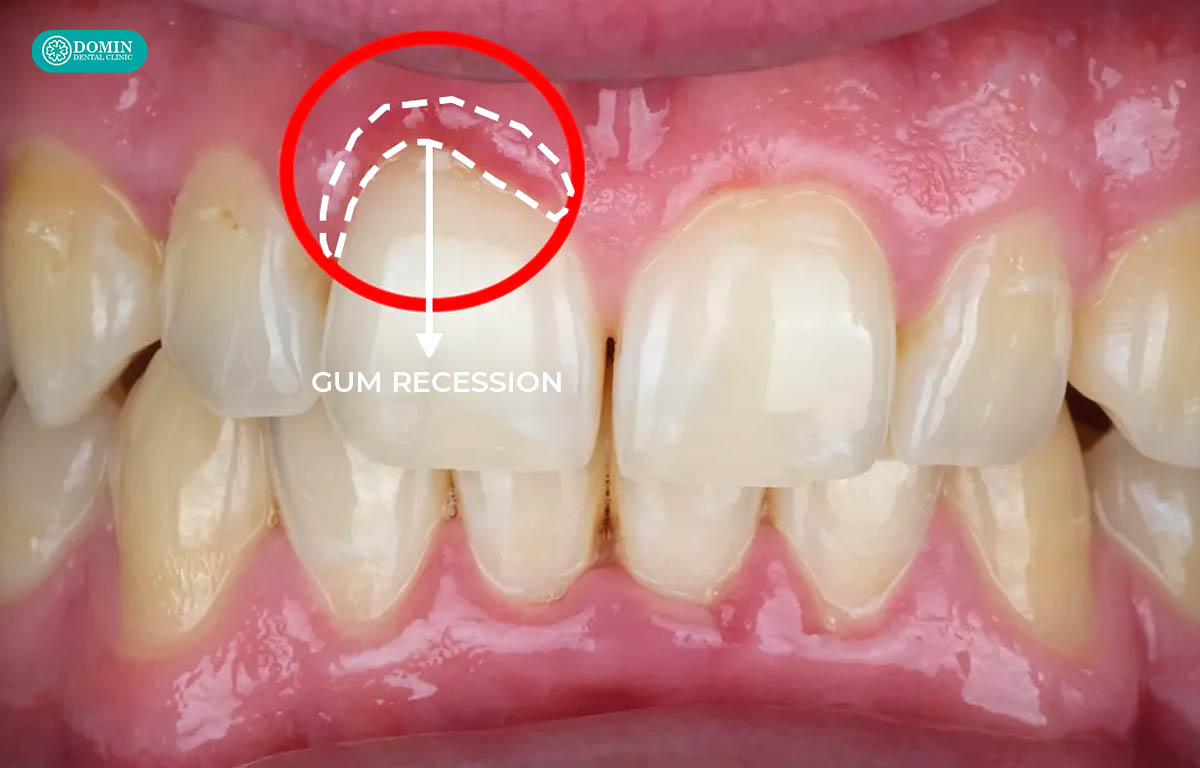
When the veneer margins are not properly designed according to tooth and gum anatomy, or when the veneer extends too deeply into the gum, plaque and bacteria can easily accumulate at the contact margins.
This condition directly leads to chronic gingival inflammation, swelling, pain, bleeding gums, and even gum recession, exposing the veneer margins, compromising aesthetics, and increasing the risk of cervical caries.
Veneers may debond or fracture
Porcelain veneers are only about 0.2–0.5 mm thick, so their resistance to chewing forces is limited. If the patient has habits such as teeth grinding, biting hard objects, or if the bite is not properly adjusted, veneers can easily crack or debond. In such cases, re-treatment requires additional tooth preparation or complete replacement of the veneers, which is both costly and causes further damage to natural teeth.
Aesthetic imbalance
A common mistake is that the dentist or technician does not thoroughly analyze the facial features, smile line, and tooth proportions before designing the veneers.
As a result, the teeth may appear too large, too thick, overly opaque, or mismatched with the skin tone and gums, making the smile look unnatural. In severe cases, patients may need to remove and completely redo the veneers.
Impact on occlusion and chewing function
Occlusion is often overlooked in aesthetic restorations. If veneers are placed incorrectly or alter the relationship between teeth, it can lead to bite misalignment, resulting in jaw muscle pain, temporomandibular joint fatigue, or wear of opposing teeth.
This is a complex complication that requires occlusal adjustment or complete veneer replacement to be fully corrected.
Causes of veneer-related complications
It is not the veneer technique itself that causes harm, but rather errors in the procedure, inappropriate clinical indications, or lack of technical control that lead to a range of complications affecting natural teeth and gum tissues. Below are the causes of veneer-related risks:
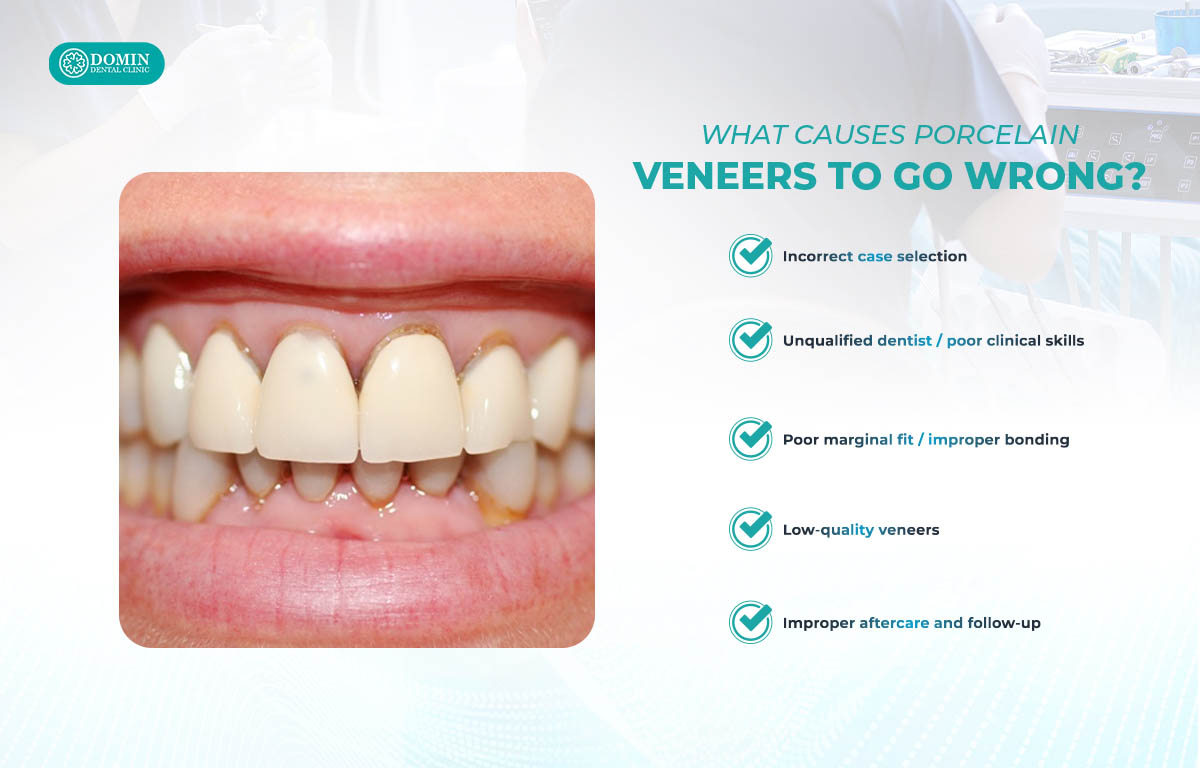
Incorrect case selection
Veneers are only suitable for teeth with intact enamel, minor misalignment, and no pulp disease or gum inflammation. However, in practice, many cases with enamel wear, cervical caries, or malocclusion are still indicated for veneers.
Forcing veneer placement in contraindicated cases results in poor adhesion, easy debonding, cracking, and irritation of surrounding tissues.
Inaccurate tooth preparation technique
Tooth preparation is a critical step that determines the durability and safety of veneers. When the dentist lacks experience, cannot control preparation depth, or does not accurately assess enamel thickness, the natural protective layer may be excessively reduced. This leads to dentin exposure, sensitivity, and reduced veneer longevity.
In addition, improper finish lines increase the risk of gum inflammation and exposed veneer margins.
Poor fit and bonding technique
The veneer bonding process requires near-perfect precision at the microscopic level. If the tooth surface is not properly treated or the bonding agent is not applied uniformly, microscopic gaps can form. These gaps allow bacteria to accumulate, causing gum inflammation, bad breath, and eventual veneer debonding.
This is a subtle but very common technical error in clinics lacking strict quality control.
Use of low-quality veneer materials or bonding agents
Porcelain materials of unknown origin or substandard bonding agents can reduce the bond strength between the veneer and enamel. Over time, veneers may discolor, crack, or detach from the natural tooth.
In particular, non-biocompatible adhesives may irritate the surrounding soft tissues, leading to inflammation and gum recession.
Improper post-treatment care and follow-up
Even when the procedure is performed correctly, veneers require proper care and regular follow-up.
Poor oral hygiene, using hard-bristled toothbrushes, sharp toothpicks, or skipping routine check-ups can cause margin gaps, plaque accumulation, and gum inflammation around veneers.
How to minimize and prevent veneer-related risks
Porcelain veneers are a highly precise aesthetic technique that requires perfect coordination between the dentist’s skill, materials, and technical control. Therefore, to minimize complications and ensure long-lasting results, the following principles must be strictly followed:
Choose a reputable dental clinic
This is the key factor determining aesthetics, durability, and safety after veneer placement. A highly skilled dentist with a good aesthetic sense will precisely control tooth preparation, preserve maximum natural enamel, and ensure proper occlusion and harmonious tooth proportions with the face.
At reputable clinics, the entire veneer process is performed in a sterile environment, using 3D scanning and advanced digital design technology, ensuring precise fit, proper proportions, and a natural appearance.
In addition, the use of certified porcelain materials and standardized laboratories helps minimize complications such as debonding, open margins, or gum inflammation, ensuring safe and long-lasting aesthetic results.
X-ray imaging and 3D scanning to evaluate tooth structure
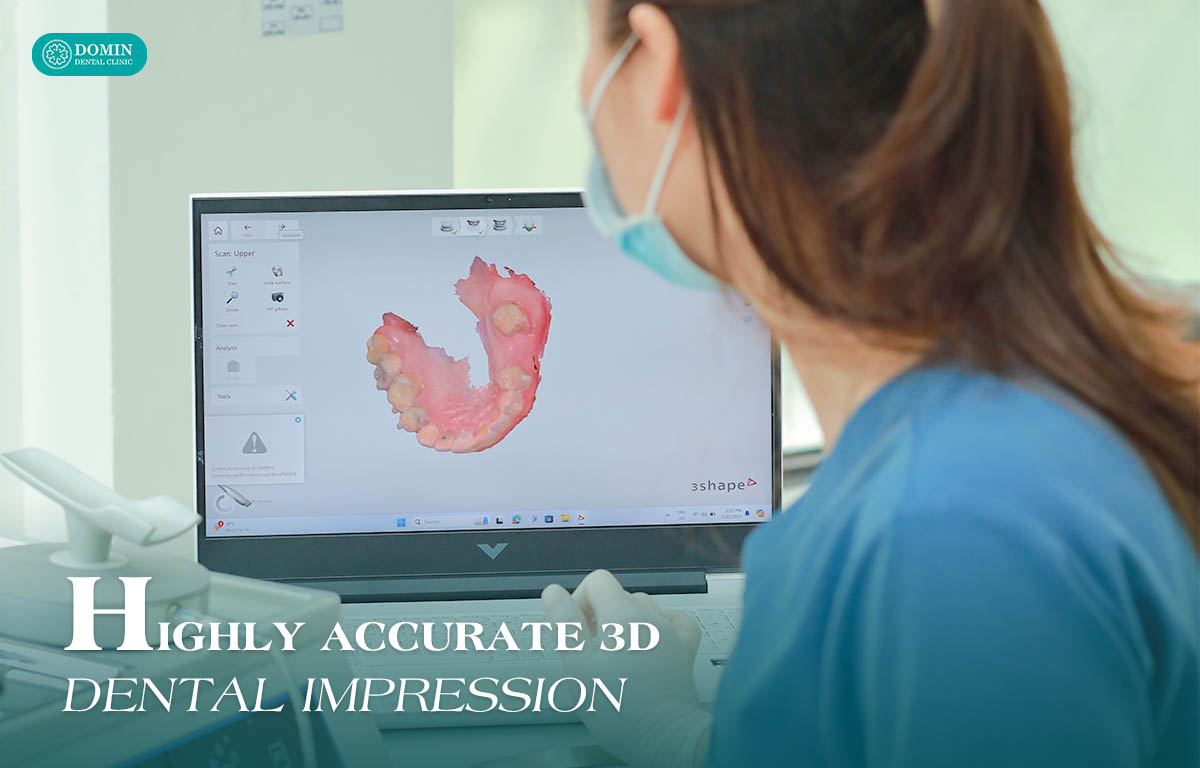
Before performing veneer placement, taking X-rays and 3D dental scans is a mandatory step that allows the dentist to comprehensively evaluate tooth structure and surrounding tissues.
3D imaging enables precise determination of enamel thickness, dentin condition, pulp status, and current occlusion, thereby allowing for minimal tooth preparation and the most suitable veneer design. This process ensures that veneers are placed on a healthy tooth foundation, avoiding excessive reduction or pulp exposure.
At the same time, 3D scanning technology also helps dentists simulate the post-treatment outcome, making it easier for patients to visualize their final smile. This is an essential step to minimize risks and optimize both aesthetics and durability of the veneers.
Use certified porcelain materials with clear documentation