Tiếng Việt
Porcelain Veneer Application – The Modern Aesthetic Dentistry Technique. Porcelain veneer placement is a modern cosmetic dentistry technique that uses ultra-thin ceramic shells (only 0.2–0.6 mm thick) bonded directly onto the front surface of the teeth.
With their precise fit, exceptional durability, and natural translucency, veneers not only conceal dental imperfections perfectly but also create a radiant, “million-dollar smile.”
What Are Porcelain Veneers?

Porcelain veneer is a minimally invasive cosmetic dental restoration, in which the dentist bonds an ultra-thin layer of porcelain (approximately 0.2–0.6 mm thick) to the outer surface of the teeth.
The goal of veneers is to enhance the shape, color, alignment, and symmetry of the teeth, creating a natural, harmonious smile.
What sets veneers apart from other restorative techniques is their ability to preserve natural tooth structure.
In most cases, only a very thin layer of enamel on the front surface needs to be polished, and in some cases — if the tooth shape is already ideal — no preparation is required at all.
This helps maintain the tooth’s biological integrity and long-term health.
Thanks to advancements in modern ceramic materials, particularly glass-ceramics that combine high translucency with superior strength, veneers now deliver exceptional esthetic results while providing excellent durability for daily function.
For this reason, porcelain veneers are regarded today as one of the most advanced, safe, and effective esthetic solutions in restorative dentistry.
Advantages and Disadvantages of Porcelain Veneers
Advantages
Porcelain veneers are considered one of the most advanced aesthetic restorative solutions in modern dentistry, offering both superior esthetics and excellent biocompatibility.
The first major advantage is their ability to preserve natural tooth structure.
Compared to dental crowns, veneers require only minimal enamel reduction — about 0.2–0.6 mm on the front surface, and in some cases, no preparation at all.
This means that the enamel and pulp remain largely intact, significantly reducing post-treatment sensitivity and ensuring the long-term health of natural teeth.
The second advantage lies in their exceptional esthetic results.
Veneers are fabricated from high-quality glass-ceramic materials, known for their translucency and light-reflective properties that closely mimic natural enamel.
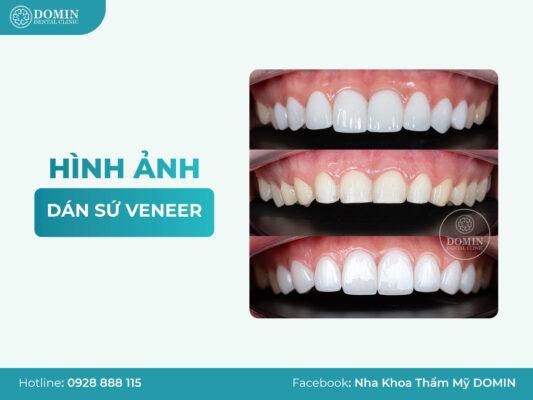
When bonded to the teeth, veneers seamlessly mask imperfections such as discoloration, tetracycline stains, enamel wear, spacing, or minor chips — all while maintaining a lifelike, natural appearance.
This makes veneers the top choice for smile enhancement, especially in the anterior aesthetic zone.

Not only do veneers deliver outstanding esthetic results, but they also offer high mechanical strength and excellent chewing stability.
Modern veneer systems such as E.max, LiSi, and Celtra are made from lithium disilicate or reinforced zirconia glass-ceramics, with an average flexural strength of 360–400 MPa, ensuring reliable durability even at a minimal thickness.
With proper care and maintenance, veneers can last 10–15 years or longer, maintaining both function and beauty over time.
In addition, veneers are highly biocompatible, safe for the gingival tissues, and resistant to gum irritation or marginal discoloration.
Their smooth, glazed porcelain surface prevents staining from food, coffee, wine, or tobacco, helping the smile remain bright and radiant for years.
Combining all these advantages, porcelain veneers are recognized as a minimally invasive, durable, and safe aesthetic restoration, providing the perfect balance between beauty, function, and preservation of natural tooth structure.
Disadvantages of Porcelain Veneers
Although porcelain veneers offer many outstanding benefits, there are still certain limitations that both dentists and patients should carefully consider before treatment.
The most significant drawback is that veneers are suitable only for mild to moderate dental imperfections.
In cases of severe misalignment, extensive rotation, or deep discoloration, veneers may not be able to fully mask or correct the underlying issues.
For such conditions, full-coverage crowns or orthodontic treatment may be more appropriate alternatives.
Another important consideration is the technical precision required.
Since veneers are only 0.2–0.6 mm thick, even minor errors in tooth preparation, impression-taking, design, or bonding can affect the final outcome—resulting in imperfect esthetics, visible margins, or veneer debonding.
Therefore, veneer placement demands high clinical expertise, meticulous technique, and support from a high-quality dental laboratory.
From a financial standpoint, porcelain veneers belong to the premium segment of cosmetic restorations, and the cost can be relatively high, depending on the ceramic material, fabrication technology, and the dentist’s skill and experience.
This can be a barrier for some patients, especially when multiple teeth are involved.
When Should You Consider Getting Veneers?

Porcelain veneers are recommended when patients wish to improve the aesthetics of their smile while still preserving as much natural tooth structure as possible.
They are especially suitable for cases such as mild tooth discoloration or staining, small chips or enamel wear, minor gaps (diastema), or slight rotation or misalignment of the front teeth.
In addition, veneers are ideal for those who prefer a minimally invasive aesthetic solution.
Because the veneer is an ultra-thin ceramic layer (0.2–0.6 mm), only a minimal amount of enamel—sometimes none at all—needs to be reduced.
This helps maintain the long-term biological health and integrity of the teeth while creating a natural, balanced, and radiant smile.
However, despite their many advantages, veneers also have limitations in clinical indication.
They are not suitable for teeth with severe structural damage, significant misalignment, reverse bite (crossbite), or strong occlusal forces, as these conditions increase the risk of chipping, cracking, or debonding.
In such cases, full-coverage crowns or orthodontic treatment may be more appropriate to ensure durability, safety, and long-term success.
Types of Porcelain Veneers Available Today
Currently, there are three main types of porcelain veneers commonly used in dentistry, including:

E.max Veneers
E.max porcelain veneers are among the most popular and highly rated veneer systems in modern dentistry.
They are made from lithium disilicate glass-ceramic, a premium material known for its exceptional esthetics and mechanical strength.
Thanks to its optical properties that closely resemble natural enamel, E.max veneers provide translucency and natural light reflection, creating a radiant, lifelike smile that is nearly indistinguishable from natural teeth.
A major advantage of E.max veneers is their high flexural strength, averaging 360–400 MPa, allowing for ultra-thin veneers (0.2–0.6 mm) that remain strong and resistant to biting forces.
This means dentists can perform minimal or even no tooth preparation, helping preserve natural enamel and reduce post-treatment sensitivity.
Additionally, E.max veneers are highly biocompatible, safe for gingival tissues, and resistant to gum irritation or marginal discoloration over time.
With proper care, their lifespan typically ranges from 10–15 years, and often longer.
However, due to their high-quality composition, E.max veneers are more expensive than other types and require precise clinical execution, as even small errors during tooth preparation or bonding can affect the final esthetic outcome.
Moreover, because of their thin ceramic layer, E.max veneers are not ideal for severely discolored or misaligned teeth, where full crowns or orthodontic solutions may be more appropriate.
LiSi Veneers
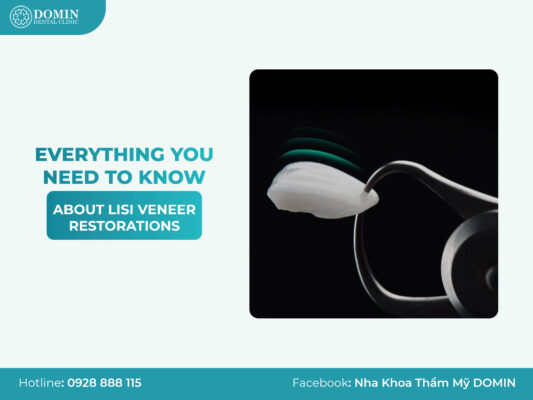
LiSi porcelain veneers are one of the latest premium veneer systems, also made from lithium disilicate glass-ceramic — the same material group as E.max, but with enhanced translucency and color reproduction.
Thanks to its superior optical properties, LiSi can mimic natural enamel with remarkable precision, producing a smile that is harmonious and lifelike.
A key advantage of LiSi veneers is their balanced combination of strength and thinness, typically only 0.2–0.3 mm thick.
This allows dentists to minimize enamel reduction, and in many cases, apply veneers directly to the tooth surface without significant preparation — an excellent option for patients concerned about tooth preservation.
LiSi veneers also feature excellent stain resistance, maintaining long-lasting brightness and color stability over time.
Thanks to the balance between aesthetic excellence and mechanical performance, LiSi veneers are widely recommended for anterior teeth and smile makeover cases, where achieving a natural yet refined appearance is essential.

Celtra Veneers
Celtra porcelain veneers are crafted from a new-generation lithium disilicate (LDS) glass-ceramic, reinforced with zirconia — a material known as Zirconia-Reinforced Lithium Silicate (ZLS).
This innovative combination brings together two outstanding advantages:
-
Superior Esthetics: Lithium disilicate provides natural translucency and enamel-like light reflection, resulting in a harmonious, radiant smile.
-
Exceptional Strength: The zirconia reinforcement significantly enhances mechanical durability and resistance to chewing forces, minimizing the risk of chipping or fracture. Celtra veneers are suitable for both anterior and posterior restorations.
Celtra veneers can be fabricated with an ultra-thin thickness of only 0.3–0.5 mm, allowing minimal or no tooth reduction during preparation. The material also features excellent color stability and resistance to staining from coffee, wine, or tobacco, maintaining a bright and beautiful appearance over time.
In summary, Celtra veneers represent a perfect balance between natural esthetics and high strength, making them an ideal choice for patients who seek a beautiful smile with reliable chewing performance.
Porcelain Veneer Procedure at Domin Aesthetic Dental Clinic
At Domin Aesthetic Dental Clinic, the porcelain veneer procedure is designed based on the core principles of safety, precision, and tooth preservation — ensuring no anesthesia, minimal intervention, and optimal esthetic results.
Typically, the entire veneer process can be completed within two appointments, following five key steps:

Step 1: Clinical Examination and Consultation
The dentist performs a comprehensive oral examination to evaluate the health of the gums, enamel, occlusion, and other related factors.
If the patient has existing dental issues such as tooth decay, gingivitis, pulpitis, or bone loss, these conditions must be treated thoroughly before veneer placement.
The dentist also discusses the patient’s esthetic expectations and desired outcome to develop a personalized treatment plan.
Step 2: Oral Treatment and Cleaning
Before applying veneers, the oral cavity must be thoroughly cleaned, and all potential sources of inflammation must be eliminated.
Addressing underlying dental problems before restoration is crucial for ensuring the longevity and adhesion strength of veneers, while minimizing the risk of debonding, leakage, or gum inflammation later on.
Step 3: Minimal Tooth Preparation
A very thin layer of enamel (0.2–0.6 mm) is carefully removed from the front surface of the teeth, depending on the clinical condition and the type of veneer used.
The principle is to limit preparation within the enamel layer to create space for the veneer while preserving as much of the natural tooth structure as possible — a key distinction from full-coverage crowns.
Step 4: Impression Taking and Veneer Design
After preparation, the dentist takes a digital or conventional impression.
The data is then sent to the dental laboratory, where veneers are fabricated using high-quality materials such as lithium disilicate or zirconia-reinforced ceramics.
Each veneer is individually customized in shape, size, translucency, and color to achieve a result that harmonizes with the patient’s teeth, smile line, and facial features.
Step 5: Final Veneer Bonding
Once the veneers are fabricated, they are tested on the teeth to check for fit, color, and overall esthetics.
If satisfactory, the dentist proceeds with surface conditioning of both the teeth and the inner side of the veneer using acid etching, followed by bonding with specialized resin cement.
The veneers are then light-cured to ensure strong and durable adhesion.
Finally, the dentist performs bite adjustment, polishing, and occlusal testing to confirm chewing comfort and stability.
Important Note:
Although porcelain veneer treatment is considered a minimally invasive procedure, it requires absolute precision at every step — from shade selection and thickness calculation to margin finishing near the gingiva.
Even minor errors during tooth preparation or bonding can result in esthetic imperfections (such as color mismatch or uneven texture), reduce veneer longevity, or cause gingival irritation, inflammation, or recession over time.
Does Getting Porcelain Veneers Hurt?
Porcelain veneer treatment is virtually painless, as the dentist only removes a very thin layer of enamel, located outside the area containing sensory nerves.
Therefore, most patients experience no discomfort at all during the procedure.
In some cases where the teeth are particularly sensitive, the dentist may apply a mild local anesthetic to ensure complete comfort.
After the veneers are bonded, a slight temporary sensitivity may occur for one or two days, which is simply a short-term adaptation and will quickly subside.
In fact, pain or discomfort only occurs if the enamel is over-prepared or the veneers are improperly adjusted to the bite — issues that can be completely avoided by choosing a reputable dental clinic and a highly experienced cosmetic dentist.
Where Is a Trusted Place to Get Veneers?

The success of a porcelain veneer treatment depends not only on the type of ceramic used, but more importantly on the dentist’s expertise and the technology applied.
That’s why choosing a reputable dental clinic is the key to achieving lasting comfort, durability, and aesthetic perfection.
In Vietnam, Domin Aesthetic Dental Clinic is one of the pioneers in porcelain veneer treatment, trusted by countless clients and celebrities thanks to its outstanding advantages:
-
Precise Technique – No Pain, No Anesthesia
With advanced technology and skilled dentists, veneer placement at Domin is virtually painless. In most cases, patients feel completely comfortable throughout the process without the need for anesthesia. -
Transparent Pricing – Reasonable Cost
Veneer prices start from 3.5 million VND per tooth (subject to change based on material type and promotions). Domin offers affordable yet high-quality restorations that meet international standards. -
Proven Quality & Genuine Feedback
Our results are backed not only by transparent media documentation, but also by hundreds of positive Google and Facebook reviews, reflecting real patient satisfaction. -
Trusted by Public Figures and Artists
Since 2016, Domin has been the chosen clinic of many KOLs, actors, and influencers who have shared their smile transformation journeys. This is the clearest proof of Domin’s credibility and craftsmanship.
Combining expertise, cutting-edge technology, and attentive care, Domin Aesthetic Dental Clinic ensures that every patient achieves not only a naturally beautiful smile but also long-lasting oral health.
Frequently Asked Questions About Porcelain Veneers
1. Are veneers durable?
The average lifespan of veneers is 10–15 years, or even longer with proper care.
International studies show a 10-year survival rate of over 90% for porcelain veneers.
2. Do veneers get stained over time?
Unlike natural teeth, veneers made from glass-ceramic materials are highly color-stable.
They are resistant to staining from food, coffee, and tobacco. However, natural teeth and gums surrounding the veneers may discolor if not properly maintained, affecting overall esthetics.
3. Do veneers require a lot of tooth reduction?
Usually, the dentist removes only 0.2–0.6 mm of enamel — just enough for the veneer to fit securely.
In many cases, no preparation is needed if the tooth shape is ideal.
This is a key advantage over full crowns.
4. Can I eat normally after getting veneers?
Yes. Patients can eat and chew normally after the procedure.
However, it’s recommended to avoid biting hard objects (such as bones, ice, or seeds) to prevent chipping.
With proper care, veneers can maintain their function and beauty for many years.
How Much Do Porcelain Veneers Cost?
The cost of veneers varies depending on factors such as ceramic type, fabrication technique, dentist’s expertise, and clinic technology.
In Vietnam, veneer prices typically range from 3.5 to 10 million VND per tooth, and may be higher for premium imported materials.
Tip: Don’t just focus on price. Consider the quality of materials, bonding technique, dentist’s experience, and warranty policy.
A properly done veneer case is an investment in long-term beauty and oral health.
Porcelain Veneers – A Smile That Inspires Confidence
Porcelain veneers are not only a cosmetic enhancement, but also a way to boost your confidence in both communication and life.
With modern technology and a highly skilled dental team, Domin Aesthetic Dental Clinic helps you achieve a naturally radiant and durable smile at a reasonable cost.
📞 Contact Information
-
Hotline: 0889 988 115
-
Fanpage: facebook.com/DOMIN.vn
-
Address: 37 Nguyen Ba Khoan, Yen Hoa, Ha Noi