Tiếng Việt
Zirconia veneers effectively correct imperfections such as discoloration, chips, or uneven teeth, delivering a bright and natural-looking smile. However, when compared to glass-ceramic veneers—known for their high translucency—are Zirconia veneers truly superior?
What are Zirconia veneers?
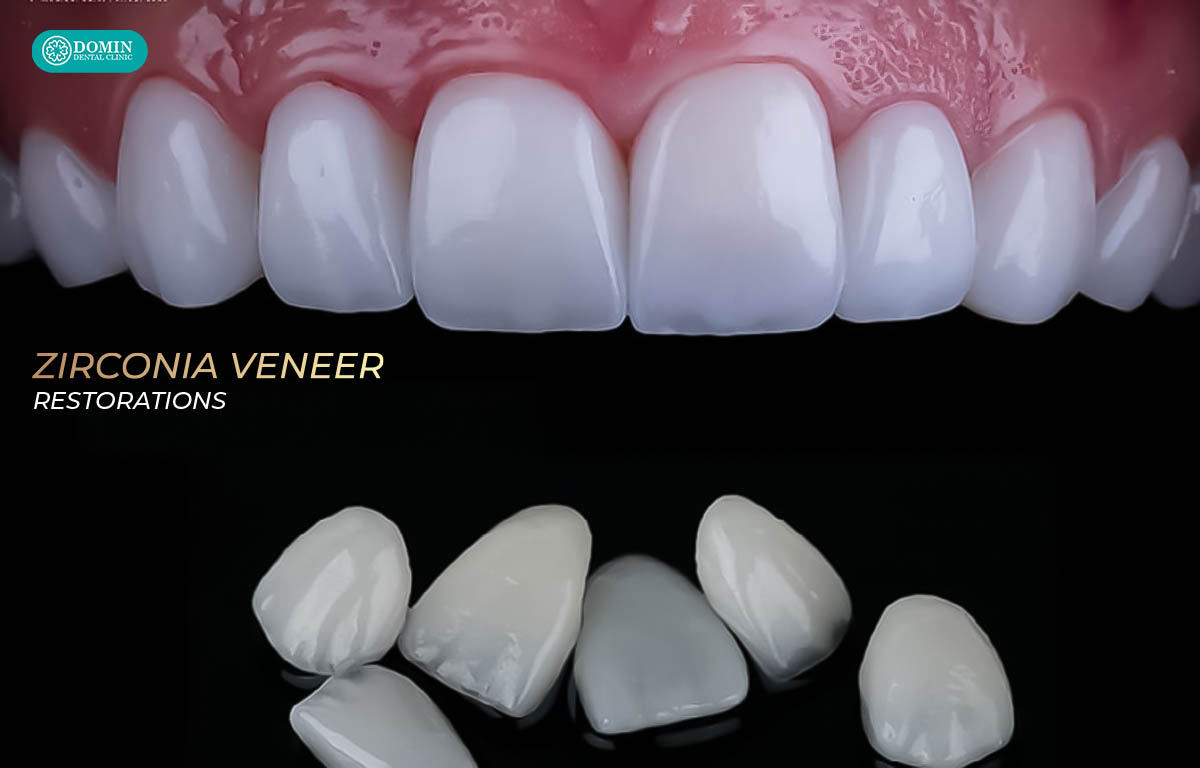
Zirconia veneers are a premium type of dental veneer made from zirconium oxide, a material well-known in dentistry for its exceptional strength, durability, and resistance compared to conventional ceramics.
While glass-ceramic veneers such as lithium disilicate are highly valued for their translucency and natural aesthetics, Zirconia veneers stand out for their long-term durability and strength. They are particularly suitable for cases requiring high load-bearing capacity or for teeth with severe discoloration or significant wear.
Structurally, Zirconia veneers consist of a strong inner Zirconia core with a flexural strength of up to 1200 MPa—many times stronger than natural enamel—covered by an outer aesthetic ceramic layer that enhances brightness and natural color. This combination allows Zirconia veneers to be both highly durable and aesthetically pleasing when precisely fabricated.
Comparison between Zirconia veneers and glass-ceramic veneers
In cosmetic dentistry, Zirconia veneers and glass-ceramic veneers are the two most commonly used materials today. Although both are ultra-thin veneers, each type has its own advantages, limitations, and clinical indications, depending on the patient’s dental condition and aesthetic expectations.
| Criteria | Zirconia Veneers | Glass-Ceramic Veneers |
|---|---|---|
| Composition | Zirconium Dioxide (ZrO₂) – ultra-strong material with high mechanical strength | Lithium Disilicate glass-ceramic with translucent crystal structure |
| Strength & durability | Very high (900–1200 MPa), much stronger than natural teeth | Moderate to high (400–500 MPa), may chip under strong force |
| Translucency & natural look | Moderate – improved in multilayer zirconia | Very high, closely mimics natural enamel |
| Masking ability | Excellent, can cover tetracycline stains or severely discolored teeth | Lower, may show underlying tooth color if too dark |
| Tooth preparation | Requires slightly more reduction for optimal aesthetics | Minimal preparation, sometimes no-prep possible |
| Biocompatibility | High, safe, non-irritating to gums | High, completely safe |
| Clinical indications | Suitable for worn, cracked teeth, bruxism, or posterior teeth under high load | Ideal for front teeth, high aesthetic demand, minor imperfections |
| Overall aesthetics | Good, natural if well-crafted | Excellent, highly translucent with superior light reflection |


Another outstanding advantage of Zirconia veneers is their near-perfect biocompatibility with the human body. Zirconia is a chemically inert material that does not cause irritation or inflammatory reactions in the gums or surrounding soft tissues.
In addition, its non-conductive properties (both thermal and electrical) help prevent sensitivity when consuming hot or cold foods. The ultra-smooth surface also reduces plaque and bacterial accumulation, contributing to long-term gum health.
Comprehensive smile enhancement
Zirconia veneers are not just a restorative method but also a comprehensive aesthetic solution for the smile. With excellent masking ability, they can correct most imperfections related to tooth shape, color, and size, resulting in a more balanced and harmonious appearance.
Who should choose Zirconia veneers?
Zirconia veneers are an ideal choice for those who want a beautiful, durable, and natural-looking smile while ensuring safety and maximum preservation of natural teeth. The following are cases where this type of veneer is recommended:


Step 1: Examination, X-rays, and dental assessment
The dentist performs a comprehensive examination, combined with X-rays and 3D dental scanning to evaluate the structure of teeth, gums, and occlusion.
Based on these results, the dentist provides detailed consultation on the dental condition, suitability of Zirconia veneers, and creates a personalized treatment plan for each patient.
Step 2: Personalized smile design
Using Smile Design software and digital scanning technology, the dentist simulates the shape, size, and color of the veneers to best match the patient’s face, skin tone, and personal style.
This stage helps patients visualize the final result and easily communicate their aesthetic expectations.
Step 3: Minimal tooth preparation – maximum preservation of natural teeth
One of the key advantages of veneers is minimal preparation, and in some cases, no preparation at all.
For Zirconia veneers, dentists at Domin carefully perform minimal enamel adjustment, affecting only the outermost layer to ensure a perfect fit while preserving the internal tooth structure.
Step 4: 3D digital impressions and veneer fabrication
Instead of traditional impression methods that may cause discomfort, digital scanning allows fast and highly precise data collection down to micrometer accuracy.
The data is then sent to a high-tech laboratory, where Zirconia veneers are fabricated using CAD/CAM technology, ensuring precise fit, accurate color, and natural translucency.
Step 5: Trial fitting, occlusion check, and final bonding
Before final placement, the dentist fits the veneers on the teeth to check occlusion, shape, color, and overall harmony. Once approved by the patient, the veneers are bonded using high-strength dental adhesive, creating a durable connection between the veneer and natural teeth. Finally, the dentist fine-tunes the bite and polishes the veneers for maximum natural shine.
Post-care for Zirconia veneers
After veneer placement, proper care is essential to maintain durability, brightness, and perfect shape for many years. Below are detailed guidelines to help protect your “million-dollar smile”:
First, maintain proper daily oral hygiene.

You should brush your teeth at least twice a day using a soft-bristled toothbrush and a non-abrasive toothpaste to avoid scratching the porcelain surface.
In addition, using dental floss or a water flosser helps clean between teeth and prevents plaque buildup around the veneer margins—areas most prone to bacterial accumulation.
After meals, rinse your mouth with saline solution or a specialized mouthwash to maintain a clean oral environment and healthy gums.
Second, eliminate harmful habits
In daily habits, you should avoid actions such as biting ice, opening bottles with your teeth, or chewing very hard foods. Although Zirconia is highly durable, excessive force can still cause chipping or micro-cracks.
If you grind your teeth during sleep, consult your dentist about using a night guard to protect your veneers.
Additionally, limit consumption of dark-colored beverages such as coffee, tea, wine, and tobacco to maintain brightness and prevent gum discoloration over time.
Third, maintain a proper diet
During the first 48 hours after veneer placement, prioritize soft foods and avoid extremely hot or cold items to allow the bonding layer to fully stabilize.
After this period, you can eat normally, but it is recommended to chew evenly on both sides to distribute bite force and avoid overloading certain teeth.
Fourth, attend regular check-ups
Finally, schedule dental check-ups every 6 months so your dentist can assess veneer condition, fit, and gum health. Professional polishing also helps maintain a smooth, glossy surface and natural light reflection.
Frequently asked questions about Zirconia veneers
Are Zirconia veneers durable?
Yes. Zirconia veneers are made from zirconium oxide, a material with strength up to 1200 MPa—many times stronger than natural enamel. This allows them to withstand strong chewing forces, resist fractures, and remain stable for many years with proper care.
Do Zirconia veneers discolor over time?
No. One of Zirconia’s key advantages is its excellent color stability. The surface resists staining from coffee, tea, or tobacco and does not oxidize in the oral environment, helping maintain a bright, natural appearance for years.
Do Zirconia veneers require significant tooth preparation?
It depends on the condition of your natural teeth. Typically, only a very thin layer of enamel (0.2–0.5 mm) is removed to create proper adhesion, without affecting the pulp or tooth structure. With modern techniques, this process is gentle and does not cause sensitivity.
In conclusion, Zirconia veneers are an excellent choice for those seeking a bright, durable, and natural-looking smile. With high strength, superior load-bearing capacity, and long-term color stability, they provide an aesthetic solution that is both beautiful and safe.
To achieve the best results, choose a reputable dental clinic and an experienced restorative specialist. If you are unsure whether Zirconia veneers are suitable for you, contact Domin Dental Clinic for a detailed consultation and evaluation.