Tiếng Việt
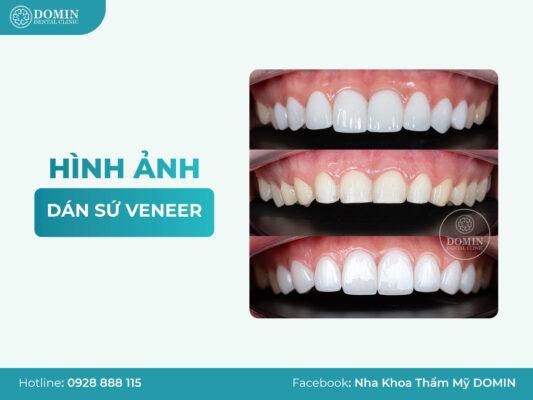
When Should You Get Porcelain Veneers? Dentists typically recommend porcelain veneers when your teeth meet specific criteria related to health condition, level of damage, tooth shape, and aesthetic goals. Below are the most common cases where veneers are considered an ideal solution — helping you enhance your smile with results that are both beautiful and long-lasting.
When Should You Get Porcelain Veneers?

Porcelain Veneers Are Commonly Recommended in the Following 5 Cases:
Discolored or Stained Teeth
Porcelain veneers are ideal for teeth affected by intrinsic discoloration, such as tetracycline or fluorosis stains, where the pigmentation lies deep within the enamel and cannot be removed through conventional whitening methods.
These stains often create a grayish, yellow, or blotchy appearance, significantly impacting the overall aesthetics of your smile.
During examination, the dentist will assess the degree of discoloration, enamel thickness, and extent of the staining.
If the discoloration is mild to moderate and the enamel remains sufficient for bonding, porcelain veneers are a suitable solution.
Using lithium disilicate glass-ceramic materials combined with opaquing inner layers and color-masking cement, veneers can restore a bright, natural shade while preserving most of the natural tooth structure.
However, in cases of severe discoloration, especially with deep tetracycline stains, the dentist may recommend slightly thicker veneers for better masking or consider full crowns if necessary.
Minor Tooth Gaps (Diastema)

Gaps between the front teeth are common and can make the smile look unbalanced. Causes may include small tooth size, a low labial frenum attachment, tongue-thrust habits, or a mild discrepancy between tooth size and arch width.
During examination, the dentist measures the gap width, analyzes tooth width–length ratios, and evaluates the overall smile line.
For small gaps (typically ≤2 mm per side) with healthy, stable gums, porcelain veneers are a suitable option. Veneers can close the space while refining tooth proportions to harmonize with facial features.
Chipped Teeth, Small Fractures, and Enamel Wear
These issues are considered superficial structural defects. While they may not affect the pulp, they reduce aesthetics and compromise protection against mechanical forces and acids.
-
Chipped enamel: Localized enamel loss without deep structural damage. Veneers can restore integrity and aesthetics.
-
Small fractures: Damage may extend to dentin but preserves a significant amount of natural tooth. Depending on tissue loss, the dentist will choose esthetic bonding, veneer, or full crown.
-
Mild enamel erosion/wear: Often due to improper brushing, bruxism, or acidic exposure. In early stages, a veneer can act as a protective shield over dentin, slowing wear and restoring function.
In these cases, veneers are commonly indicated to maximize tooth preservation while restoring function and cosmetic appearance.
Unfavorable Tooth Shape or Size Discrepancy
Atypical shapes or disproportionate sizes may include teeth that are too small, peg-shaped, pointed, or wedge-like, or teeth whose width–length ratios are not harmonious with the smile and facial features.
-
Teeth that are too small: Create visible spaces and a less full smile. Veneers can increase visible dimensions precisely for a balanced smile line.
-
Abnormal shapes (pointed, tapered, peg-shaped): Disrupt natural harmony; veneers re-contour edges and outlines to meet aesthetic “golden ratio” principles.
-
Disharmonious proportions: Some incisors or canines may be too large or too small compared with adjacent teeth. Veneers allow the dentist to re-shape and re-proportion for overall uniformity.
Mild Crowding or Minor Misalignment
Adults often seek a faster alternative to orthodontics for mild crowding or slight rotations—especially in the smile zone. In such cases, veneers can be an optimal cosmetic solution when the patient declines or lacks time for braces/aligners.
Veneers provide a “visual alignment” by creating a new, even facial plane of the teeth so they appear straight and harmonious.
Key benefits include rapid aesthetic improvement in a few visits, maximum tooth preservation, and natural chewing comfort.
Limitations: Veneers are suitable only for minor discrepancies. For moderate to severe malocclusion or occlusal problems, orthodontic treatment remains the standard of care.
Also Ideal for Smile Makeovers
Beyond the indications above, veneers are a great choice for clients who want a quick, minimally invasive smile transformation with high aesthetic impact.
How Do Dentists Decide If You’re a Candidate for Veneers?
To determine whether porcelain veneers are appropriate, patients undergo a comprehensive multi-step evaluation that typically includes:

Understanding Patient Goals and Aesthetic Expectations
The first step in evaluating veneer candidacy is to identify the patient’s aesthetic motivations and expectations. This step is essential because not every case requires—or is suitable for—veneers.
The dentist begins by clarifying why the patient is seeking treatment:
-
Some wish to brighten tooth color after failed whitening treatments.
-
Others want to reshape teeth or close small gaps.
-
Some patients aim to correct slight misalignment without undergoing orthodontic treatment.
Each of these goals leads to different indications and veneer approaches.
At the same time, the dentist must analyze the patient’s expectations:
Do they want to redesign the entire smile or just enhance the front teeth?
Do they prefer maximum aesthetic change with minimal invasiveness, or are they willing to accept more tooth preparation for comprehensive coverage?
Clarifying these expectations early ensures mutual understanding, helping avoid dissatisfaction after treatment and allowing the dentist to tailor a personalized, realistic treatment plan.
Comprehensive Clinical Examination
Once the patient’s expectations are clear, the dentist performs a thorough oral examination. This step determines whether the patient’s oral health and functional conditions are suitable for veneers.
The dentist first checks the teeth and surrounding tissues for signs of decay, pulp inflammation, gingivitis, or periodontitis.
Any underlying issues must be treated completely before veneer placement, since even the most beautiful veneers cannot last on unhealthy teeth.
Next, the bite alignment (occlusion) is evaluated.
Patients with deep bites, crossbites, or significant malocclusion are often not suitable candidates for veneers, as these conditions increase the risk of chipping or veneer failure.
In such cases, the dentist may recommend orthodontic treatment or a comprehensive approach before aesthetic restoration.
This clinical evaluation not only confirms whether the patient is medically fit for veneers but also forms the foundation for the smile design plan that follows.
Evaluation of Teeth for Restoration

After ruling out any oral diseases, the dentist performs a detailed evaluation of the teeth planned for veneer placement.
This is a crucial step to determine whether the teeth meet the technical requirements for veneers or if another restorative option would be more appropriate.
First, the tooth color is assessed. The dentist distinguishes between extrinsic stains (which can often be improved with whitening) and intrinsic discoloration — such as tetracycline or severe fluorosis — which typically require veneers for full coverage.
Next, the enamel condition is examined. Veneers bond most securely to enamel, as the strongest adhesion occurs on the enamel surface.
If enamel is too thin or largely eroded, the risk of veneer detachment increases, and full crowns may be a better solution.
The dentist also evaluates tooth shape and size.
Conditions such as spacing, small teeth, minor chipping, or mild enamel wear are classic indications for veneers.
However, if the tooth has significant structure loss or has undergone root canal treatment, veneers alone may not be sufficient to restore both function and aesthetics.
Additionally, tooth alignment plays a key role.
Veneers are best suited for mild misalignment; moderate to severe crowding or bite irregularities may require orthodontic correction or full crowns for a stable and safe result.
Treatment Planning
Once the teeth meet the basic criteria, the dentist develops an aesthetic treatment plan to visualize the outcome and confirm expectations with the patient.
A dental impression or 3D scan is taken to design the shape, proportion, and alignment of the new veneers so that they complement the patient’s facial features.
A mock-up model is then temporarily applied to the natural teeth, allowing the patient to preview the new smile, provide feedback, and request adjustments before the final veneers are fabricated.
This step helps the dentist evaluate clinical feasibility and ensures that the final result is both aesthetic and personalized to the patient’s desires.
Final Diagnosis and Veneer Candidacy Decision
After completing all clinical evaluations and aesthetic planning, the dentist makes the final indication decision — determining whether veneers are indeed the most suitable solution.
If the teeth have sufficient enamel, minor defects, slight misalignment, or small gaps, and the desired aesthetic change aligns with veneer capabilities, porcelain veneers will be recommended.
Conversely, if there is significant tooth loss, thin enamel, or severe misalignment or occlusal issues, the dentist may suggest full crowns or orthodontic treatment before veneers.
This approach ensures that the treatment not only delivers exceptional aesthetics, but also preserves natural tooth structure, maintains proper function, and extends the lifespan of the restoration.
Benefits of Correct Veneer Indication

When porcelain veneers are correctly indicated and applied, patients can enjoy multiple benefits in terms of aesthetics, function, and tooth preservation.
• Rapid Aesthetic Enhancement
Veneers effectively cover imperfections in color, shape, or spacing, delivering a beautiful, symmetrical smile in just a few appointments.
• Maximum Tooth Preservation
Compared to full crowns, veneers require only minimal enamel reduction, preserving the natural tooth structure and reducing the risk of pulp irritation or sensitivity.
• Improved Chewing Function
For cases with minor enamel wear, chipping, or small fractures, veneers not only restore the natural form but also reinforce the biting surface, improving chewing efficiency.
• Boosted Confidence
A balanced, attractive smile helps patients feel more confident in daily interactions and enhances overall facial harmony.
• Minimally Invasive and Time-Efficient Solution
Veneers are ideal for individuals who want a quick smile transformation without braces or extensive dental work. The procedure is gentle, conservative, and offers long-lasting aesthetic results.
In conclusion, proper veneer indication is crucial to ensure long-term success in both aesthetics and function.
Veneers are best suited for:
-
Severely discolored teeth unresponsive to whitening treatments,
-
Small gaps or mild spacing between teeth,
-
Chipped, lightly worn, or slightly fractured teeth,
-
Irregularly shaped or disproportionate teeth,
-
Mild misalignment, or
-
Patients seeking a fast, minimally invasive smile makeover.
Conversely, if teeth have significant structural loss, thin enamel, or severe crowding and bite discrepancies, other options such as full crowns or orthodontic treatment may be more suitable to maintain a beautiful, natural, and lasting smile.